Quishing & AI Scams Malaysia: The New Phishing Threat (2026 Update)
Key Takeaways
- Quishing is phishing via QR codes, bypassing traditional email filters to steal login data or money.
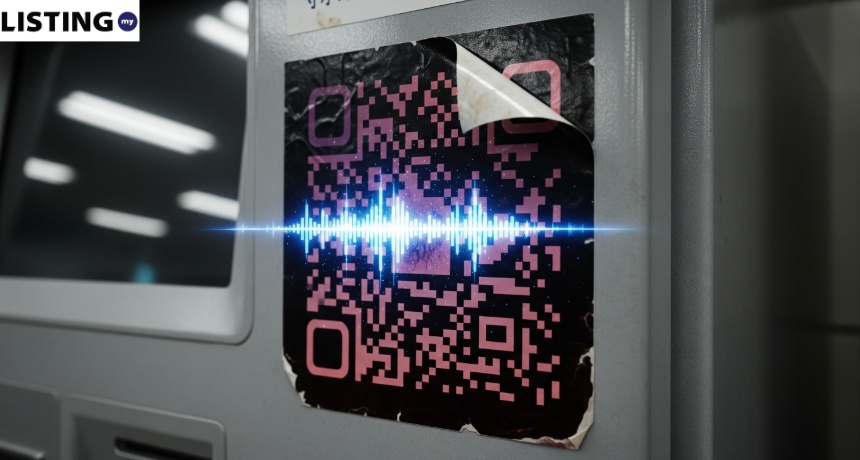
- Physical QR tampering on parking machines and restaurant tables is rising in KL and Selangor.
- AI Voice Cloning allows scammers to mimic your boss or family member with 3 seconds of audio.
- Verification is key: Always call back using a known number before transferring urgent funds.
- Report immediately to the National Scam Response Center (NSRC) at 997 if you suspect a breach.
What Are Quishing and AI Deepfake Scams?
Quishing (QR Phishing) and AI Deepfakes are the latest evolution of social engineering, moving attacks from your email inbox to your physical environment and phone calls.
The days of easily spotting a scam due to bad grammar or a foreign prince story are over. In 2026, Malaysian SMEs and individuals are facing highly sophisticated attacks where scammers hijack trusted everyday tools—like QR codes for parking payments or voice notes on WhatsApp—to deceive victims. These attacks exploit trust and urgency, often bypassing standard antivirus software.
🛡️ Threat Comparison Matrix: How Scams Have Evolved
| Threat Type | Delivery Method | Primary Target | Key Red Flag 🚩 |
| Traditional Phishing | Email / SMS | Login Credentials | Strange sender address, generic greetings, typos. |
| Quishing (QR) | Physical Stickers / Digital Images | Mobile Devices & Banking Apps | Sticker feels “pasted over” original code; URL looks random. |
| AI Vishing (Deepfake) | WhatsApp Call / Voice Note | Immediate Fund Transfer | “Urgent” request from a familiar voice; caller refuses a return call. |
What Is “Quishing” and How Does It Work?
Quishing is a cyberattack where scammers direct victims to malicious websites using QR codes instead of text links.
Traditional email security gateways scan links and attachments for malware. However, most security systems read QR codes simply as images, allowing them to slip through firewalls. When you scan the code with your smartphone, you are taken to a fraudulent site that looks identical to a legitimate login page (like Microsoft 365, Maybank2u, or CIMB Clicks) or prompts a malware download.
Because the attack happens on your personal mobile device—which often lacks the robust security of your office laptop—the success rate for quishing is alarmingly high.
The “Sticker Swap”: Real-World Quishing Scenarios in Malaysia
Physical tampering of QR codes in public spaces is becoming a primary method for stealing payment data.
You park your car in a busy area like Bangsar or Bukit Bintang. You see the familiar “Pay Here” QR code sticker on the machine. You scan it, key in your credit card details, and pay the RM3 parking fee.
Two weeks later, your card is charged RM5,000.
How it happens:
Scammers print their own QR stickers and paste them over the legitimate codes on:
- Parking Payment Machines: Redirecting you to a fake payment gateway that harvests your credit card info.
- Restaurant Tables: Scammers paste stickers over ordering QRs. You think you are ordering a burger; actually, you are downloading malware or authorizing a recurring payment via your e-wallet.
- Fake Parking Summons: While not a QR swap, scammers place fake summons notices on windshields with a QR code for “quick payment discounts.”
Tip: If you are connecting to public networks after scanning these codes, you are doubly exposed.
AI Voice Cloning: The “Boss” is Calling
AI technology can now clone a person’s voice with 95% accuracy using just a few seconds of audio from social media.
This is the “Deepfake Audio” threat. For SMEs, this usually manifests as “CEO Fraud.”
The Scenario:
An accounts executive receives a WhatsApp call or voice note from the company Director. The voice sounds exactly like the boss—same tone, same accent, same pause patterns.
“Hi Sarah, I’m in a meeting with a client and my banking app is down. Can you transfer RM15,000 to this vendor account immediately? I’ll approve the paperwork when I get back to the office.”
Because the voice is familiar, the employee bypasses standard approval protocols. By the time the real boss walks out of the meeting, the money is gone.
Why it works:
- Low Barrier to Entry: Scammers use cheap AI tools to clone voices from TikTok, Instagram Reels, or corporate webinar recordings.
- Urgency: The request is always urgent, pressuring the staff to act without thinking.
How to Spot and Verify These Threats
Defense against high-tech scams requires low-tech verification methods.
Technology alone cannot stop these attacks because they manipulate human psychology. You need to implement strict “Human Firewalls.”
1. Verify QR Codes Before Scanning
- Touch It: Run your finger over the QR code. if it feels like a sticker pasted over the original surface, do not scan it.
- Check the URL: When your phone camera reads the code, look at the preview URL. Does it say maybank2u.com.my or payment-portal-secure-xy.com?
- Use Official Apps: Whenever possible, use the official Touch ‘n Go or parking app to pay manually instead of scanning a random code.
2. The “Call Back” Protocol
If you receive an urgent request for money or data from a boss, client, or family member:
- Hang Up: Do not engage further on that call.
- Call Back: Dial their known, saved phone number directly. Do not use the number that just called you.
- Establish a “Safe Word”: For families and finance teams, agree on a secret word that must be spoken to authorize emergency transfers.
3. Educate Your Team
Your firewall can’t save you if your staff invites the hacker in. Regular training is essential.
Scams are evolving faster than most businesses can adapt. If your team is overwhelmed by security alerts, it might be time to bring in experts.
Quick Tip: Need to verify a vendor’s legitimacy before paying? Search their business profile and real customer reviews on Listing.my, Malaysia’s trusted business directory.
Conclusion
Quishing and AI deepfakes prove that we can no longer trust our eyes and ears implicitly. In 2026, a “Zero Trust” mindset is not just for IT professionals; it is a survival skill for every Malaysian business owner. Verify every request, inspect every code, and never let urgency override security protocols.
FAQ: Quishing & AI Scams
What exactly is Quishing?
Quishing is “QR Code Phishing.” It involves using malicious QR codes to direct victims to fake websites that steal login credentials or install malware on their devices.
Can AI really copy my voice from TikTok?
Yes. Scammers only need about 3 to 10 seconds of clear audio (from TikTok, Instagram, or interviews) to train an AI model to mimic your voice and say whatever they type.
How do I report a scam number in Malaysia?
Immediately call the National Scam Response Center (NSRC) at 997 (8 AM – 8 PM daily). If money has been transferred, call your bank’s fraud hotline immediately after.
Are QR codes on restaurant tables safe?
Generally yes, but always check if a sticker has been pasted over the original code. If the URL looks strange or asks for a credit card number just to view a menu, be suspicious.
What is the best defense against AI voice scams?
The best defense is a “Call Back” policy. If you get a suspicious request, hang up and call the person back on their verified mobile number to confirm it was them.
Do banking apps protect against Quishing?
Banking apps have security features, but if you scan a code that takes you to a fake banking website in your browser, the app cannot protect you. Always check the URL bar.