Red Flags to Watch Out for When Choosing New Glove Suppliers

- 31 March 2026
- Business
Key Insights
- Choosing the wrong glove supplier can lead to supply disruptions, compliance risks, and financial losses.
- Procurement teams must evaluate certifications, manufacturing capacity, and supplier credibility before committing to large orders.
- Fraudulent PPE suppliers became more common during periods of high global demand, making verification essential.
- Understanding supplier red flags helps buyers avoid unreliable manufacturers and low-quality products.
- Strategic sourcing and supplier vetting enable businesses to build stable long-term glove supply partnerships.
New glove suppliers refer to manufacturers, wholesalers, or distributors that businesses are considering for the first time when sourcing disposable gloves such as nitrile, latex, or vinyl. Procurement teams evaluate these suppliers based on reliability, product quality, certifications, pricing, and production capacity before establishing long-term purchasing agreements.
Disposable gloves are essential personal protective equipment (PPE) used across healthcare, laboratories, food processing, manufacturing, and cleaning industries. Many businesses purchase gloves in bulk to maintain operational safety and regulatory compliance.
However, sourcing from unverified or unreliable suppliers can create serious risks, including:
- Poor product quality
- Shipment delays
- Certification issues
- Payment fraud
- Supply chain disruptions
For procurement managers, distributors, and importers, carefully evaluating new glove suppliers helps ensure consistent product quality and reliable supply.
Businesses often research glove manufacturers in Malaysia, Thailand, and other major producing countries because these regions are global hubs for disposable glove production.
Common Procurement Risks When Sourcing PPE Suppliers
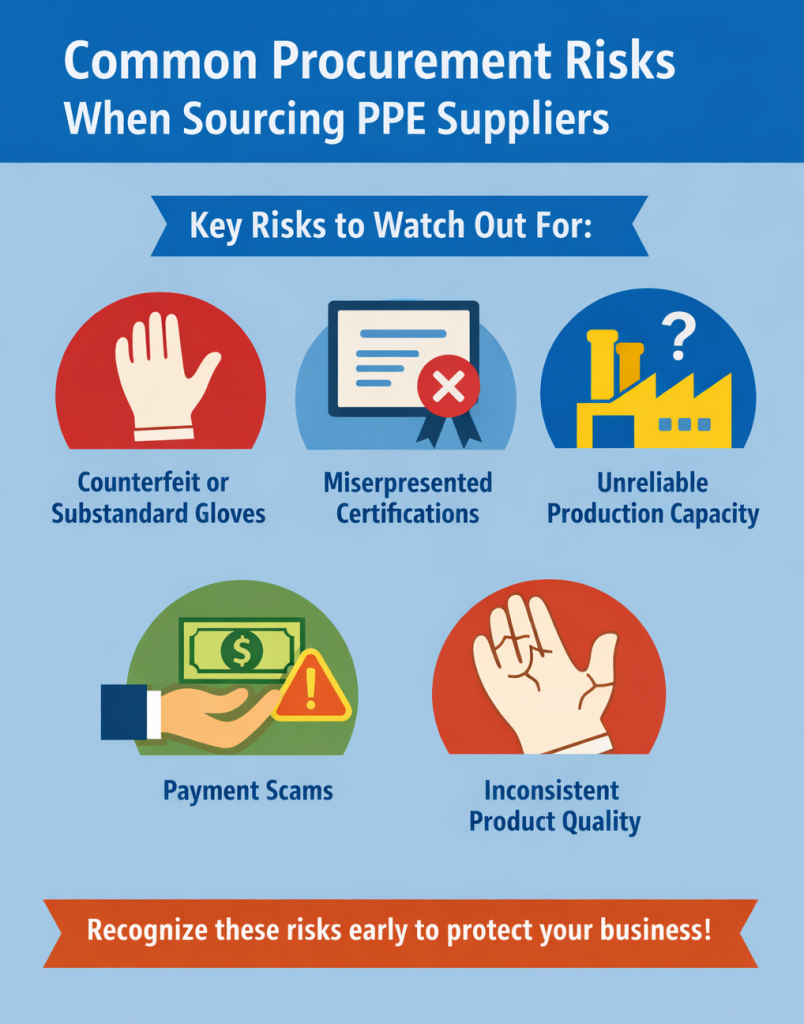
Before discussing specific warning signs, it is helpful to understand the risks involved in sourcing new suppliers in the PPE industry.
Some of the most common procurement risks include:
- Counterfeit or substandard gloves
- Misrepresented certifications
- Unreliable production capacity
- Payment scams
- Inconsistent product quality
These risks are particularly relevant when working with international suppliers or newly established trading companies.
By recognizing potential red flags early, buyers can reduce procurement risks and protect their organizations.
Red Flags to Watch Out for When Choosing New Glove Suppliers
1. Lack of Industry Certifications
One of the first indicators of supplier credibility is compliance with international standards.
Legitimate glove manufacturers typically provide certifications such as:
- ISO 13485 (medical device quality management)
- FDA registration (for medical gloves)
- CE marking
- ASTM or EN standards
If a supplier cannot provide valid certification documents, or if the documents appear outdated or inconsistent, it may indicate that the products do not meet regulatory requirements.
For healthcare and food industries, this can create serious compliance risks.
2. Unusually Low Prices Compared to Market Rates
Pricing that appears significantly below market averages should always be approached with caution.
While competitive pricing is common in bulk procurement, extremely low quotes may indicate:
- Substandard glove materials
- Fake or misleading products
- Hidden fees
- Scam operations
Experienced PPE buyers often compare quotes from multiple bulk glove suppliers to understand realistic market pricing.
A sustainable supplier should be able to explain the factors behind their pricing structure.
3. Limited Manufacturing Transparency
Reliable glove suppliers are typically transparent about their production capabilities.
Warning signs may include:
- No factory location information
- Refusal to provide factory photos or videos
- Lack of production capacity details
- No ability to arrange factory audits or inspections
Buyers often prefer working directly with glove manufacturers in Malaysia or other established production regions because many reputable companies operate large-scale certified facilities.
Transparency builds trust and helps procurement teams assess supplier reliability.
4. Poor Communication and Inconsistent Information
Communication quality often reflects the professionalism of a supplier.
Red flags may include:
- Slow or inconsistent responses
- Changing product specifications
- Incomplete documentation
- Conflicting information about pricing or lead times
Reliable suppliers typically provide clear documentation for:
- Product specifications
- Packaging details
- Minimum order quantities (MOQ)
- Production lead times
- Shipping arrangements
Consistent communication is critical when negotiating with PPE suppliers or coordinating international shipments.
5. Lack of Track Record or Market Presence
Another common warning sign is the absence of verifiable company history.
Before working with new glove suppliers, buyers should check:
- Company registration details
- Years in operation
- Client references
- Industry presence
- Online reputation
Many reputable glove manufacturers in Malaysia have decades of experience and established export networks serving global healthcare and industrial markets.
Suppliers with no verifiable background may pose a higher procurement risk.
6. Unclear Payment Terms or Upfront Payment Requests
Payment structures are another area where buyers should remain cautious.
Common payment terms for bulk glove procurement include:
- Letter of Credit (LC)
- Partial deposit with balance after shipment
- Escrow payment arrangements
Potential red flags include:
- Requests for full payment before production
- Pressure to transfer funds quickly
- Limited or unverifiable banking information
Carefully reviewing payment terms helps protect buyers from fraudulent transactions.
7. Inconsistent Product Samples
Product samples are often used to evaluate glove quality before placing large orders.
Warning signs include:
- Samples that differ from production specifications
- Inconsistent thickness or material quality
- Poor packaging or labeling
Buyers should request multiple samples and confirm they match the specifications stated in purchase agreements.
This step is especially important when sourcing from disposable glove suppliers for healthcare or food industries.
How Procurement Teams Can Verify New Glove Suppliers
To reduce risks, procurement professionals often follow a structured supplier verification process.
Best practices include:
- Conducting supplier background checks
- Verifying certifications with issuing authorities
- Requesting factory documentation or audits
- Comparing multiple supplier quotes
- Evaluating production capacity and lead times
Some buyers also rely on industry directories or verified supplier platforms to identify legitimate manufacturers.
These tools can simplify the supplier discovery process.
Conclusion
Sourcing from new glove suppliers can offer valuable opportunities for procurement teams looking to secure competitive pricing and stable supply chains. However, careful evaluation is essential to avoid unreliable vendors, poor product quality, or fraudulent transactions.
By identifying warning signs such as missing certifications, unrealistic pricing, unclear payment terms, and limited manufacturing transparency, procurement managers and distributors can make safer sourcing decisions.
For businesses researching reliable suppliers, business directory platforms such as Listing.my provide a practical starting point. The platform allows reputable glove manufacturers in Malaysia to list their businesses while helping buyers discover trusted glove brands and connect with manufacturers when sourcing disposable gloves in bulk.
Frequently Asked Questions (FAQs)
1. How can I verify the credibility of new glove suppliers?
You can verify suppliers by checking certifications, reviewing company registration records, requesting references, and conducting factory audits.
2. Why are glove manufacturers in Malaysia widely recognized?
Malaysia is one of the world’s largest glove-producing countries, with advanced manufacturing facilities and established export networks.
3. What certifications should disposable glove suppliers have?
Common certifications include ISO 13485, FDA registration, CE marking, and compliance with ASTM or EN standards depending on the glove type.
4. Is it better to buy directly from manufacturers or wholesalers?
Buying directly from manufacturers may offer lower prices and stable supply, while wholesalers can provide smaller order quantities and faster delivery.
5. What are typical minimum order quantities for bulk glove suppliers?
Minimum order quantities vary but often range from tens of thousands to several million gloves depending on the manufacturer.
6. How can businesses avoid PPE procurement scams?
Businesses should verify supplier credentials, avoid suspicious payment requests, request samples, and compare multiple suppliers before making payments.