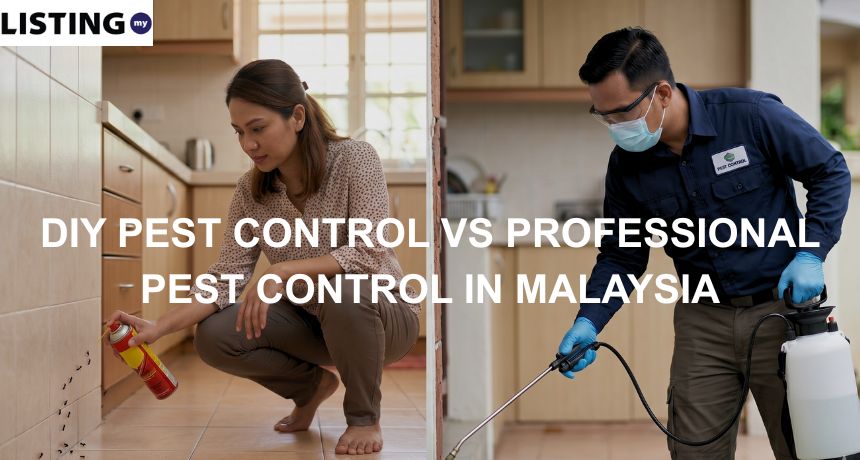
DIY Pest Control Vs Professional Pest Control In Malaysia
Key Takeaways:
- Pests in Malaysia can cause serious damage and business problems. Termites may weaken house structures and even cause roofs to collapse, while restaurants and food businesses can be forced to close for up to 14 days if they fail hygiene inspections.
- Using cheap insect sprays on termites can make the problem worse. Instead of killing the colony, the termites spread deeper into walls and create new nests.
- Small pest problems like fruit flies or common ants can usually be handled with DIY methods. However, dangerous infestations such as termites, rats, or German cockroaches should be treated by professional pest control experts immediately.
- In Malaysia, pest control companies must follow strict laws. They need a valid PCO license, and their technicians must have certified pesticide handling licenses under the Pesticides Act 1974.
- Professional pest control contracts offer long-term protection, warranties, and proper documentation that help businesses meet JAKIM Halal compliance requirements.
DIY vs professional pest control in Malaysia refers to the choice between a property owner managing a pest issue independently using consumer-grade chemicals, and hiring a licensed Pest Control Operator (PCO). While DIY is economical for minor, localized insect problems, professional services deploy specialized technology and Integrated Pest Management (IPM) to legally eliminate severe, structurally threatening infestations.
When you see ants in your kitchen or hear noises in your ceiling, the first reaction is often to use a supermarket insect spray. However, Malaysia’s hot and humid climate allows pests to breed and spread very quickly.
For homeowners, termites can silently damage wooden structures inside walls and ceilings. For F&B businesses, pest problems can lead to serious consequences, including surprise inspections, fines, temporary closures, and negative social media attention.
This guide will help you understand when DIY pest control is enough and when it is better to hire licensed pest control companies in Malaysia to properly solve the problem.
How to Know If You Need DIY or Professional Pest Control
Before spending thousands of ringgit on treatments that may not work, it is important to understand how serious your pest problem could be.
The following simple checklist can help you decide whether DIY pest control is enough, or if you need professional pest control services in Malaysia.
Category A: Low Severity Pest Problems
Common Pests
- Black ants
- Sugar ants
- Fruit flies
- Houseflies
Signs to Look For
- Pests are only seen in one small area
- Infestation is near food spills, sinks, or rubbish bins
- Only a small number of pests are visible
Recommended Solution
- Basic cleaning and good hygiene are usually enough to control the problem. Natural remedies like vinegar sprays or pandan leaves may help.
- You can also use gel baits or simple DIY pest control products from supermarkets.
Category B: High Severity Pest Problems
Common Pests
- Subterranean termites
- German cockroaches
- Rats
- Bedbugs
Signs to Look For
- Pests are hiding inside walls, ceilings, or roof spaces
- Mud tubes along walls
- Hollow or damaged wood
- Chewed electrical wires
- Droppings or foul smells
- Infestations in food preparation areas
Recommended Solution
- Stop using aerosol sprays or store-bought chemicals immediately. These pests usually require professional treatment.
- Contact a licensed pest control company in Malaysia for a proper inspection and long-term solution.
The Hidden Cost of Delaying Professional Pest Control: For Homes
Trying to save money with a cheap DIY solution for a serious pest infestation can often make the problem worse. In many cases, delaying proper treatment leads to higher repair costs, larger infestations, and more expensive pest control services later on.
What Is the Termite Scattering Effect?
Many DIY termite sprays sold in hardware stores use fast-acting chemicals that only kill the termites you can see. While this may look effective at first, the spray usually cannot reach the thousands of termites hiding inside walls, ceilings, or underground colonies.
When termites detect these chemicals, they treat the area as dangerous and quickly move away. This causes the colony to split and spread into new hidden areas of the property.
Pest control professionals call this the “Termite Scattering Effect.”
Why DIY Termite Sprays Can Make Things Worse
Instead of removing the termite colony, DIY sprays can push termites deeper into your home, including:
- Roof structures
- Wooden cabinets and wardrobes
- Wall cavities
- Nearby rooms
This allows the infestation to spread further without being noticed. By the time the damage becomes visible, repair costs can become very expensive.
When to Call Professional Pest Control Services
If you suspect a termite infestation, avoid using random aerosol sprays or supermarket chemicals. Licensed pest control companies in Malaysia use professional inspection tools and targeted treatments that are designed to eliminate the entire colony safely and effectively.
The Risk of Delaying Pest Control: For Commercial Properties
For commercial properties, especially restaurants, cafés, hotels, warehouses, and offices, delaying proper pest control can lead to serious business problems.
A small pest issue can quickly turn into a major infestation that affects daily business operations, customer trust, and business reputation.
Why DIY Pest Control Is Risky for Businesses
Many business owners try to solve pest problems using supermarket sprays or cheap DIY methods. While this may temporarily reduce visible pests, it usually does not remove the main infestation hidden inside ceilings, storage areas, drains, wall cavities, or kitchen equipment.
Pests such as cockroaches, rats, termites, and flies can continue breeding behind the scenes, causing the problem to return quickly.
The Hidden Costs of Pest Infestations for Businesses
Ignoring a serious pest problem can lead to:
- Failed health inspections
- Temporary business closure orders
- Product contamination
- Damaged electrical wiring and equipment
- Negative customer reviews
- Viral social media complaints
- Loss of customer confidence
For F&B businesses in Malaysia, pest sightings during inspections can result in heavy fines or temporary closure notices from local authorities.
Why Professional Pest Control Matters
Professional pest control companies use proper inspection methods, targeted treatments, and scheduled monitoring to control infestations safely and effectively.
For commercial properties, regular pest management is also important for protecting business operations, customer safety, and long-term reputation.
Further reading: 10 Signs You Need Pest Control Immediately in Malaysia
Pest Control Regulations and Business Compliance in Malaysia
Under the Pesticides Act 1974, pest control companies must have a valid Pest Control Operator (PCO) license issued by the Pesticides Board of Malaysia. Technicians handling chemicals are also required by law to hold proper certifications, such as a Pesticide Applicator License (PAL) or Assistant Pesticide Applicator License (APAL).
These strict rules ensure treatments are performed safely without contaminating food preparation surfaces, water supplies, or living spaces.
Compliance Matters for Businesses
For restaurants, cafés, food factories, and other F&B businesses, pest control compliance is extremely important. Under Section 11 of the Food Act 1983, health officers from the Ministry of Health (KKM) can immediately close food premises with serious hygiene or pest infestation issues.
Importance of Professional Pest Control Records and Documentation
Many businesses in Malaysia are also required to maintain updated pest control records and logbooks.
These documents are often needed for:
- Municipal licensing inspections
- Food safety audits
- Health inspections
- Halal certification requirements from JAKIM
Working with a licensed pest control company helps businesses stay compliant, protect their reputation, and maintain a safe environment for customers and staff.
Simple Pest Control Cost and Risk Comparison in Malaysia
The table below shows the common costs, risks, and differences between DIY pest control and professional pest control services for homes and businesses in Malaysia.
| Property Type & Scenario | DIY Approach (Cost & Risk) | Professional Approach (Cost & Warranty) | The Verdict |
|---|---|---|---|
| Double-Storey Terrace House (Subterranean Termites) | Cost: RM100 – RM300 for commercial liquid termiticides. Risk: High risk of colony scattering, leading to eventual roof truss or ceiling collapse. | Cost: RM1,500 – RM3,500 for a comprehensive Termite Baiting System (TBS). Warranty: Includes a 1 to 2-year colony elimination guarantee (5-year structural warranties generally apply to soil drilling treatments). | Mandatory Professional. DIY methods cannot eradicate deep underground colony structures. |
Conclusion
Understanding when to use DIY pest control and when to hire professionals is important for protecting your home, property, or business in Malaysia.
Small pest problems, such as ants or flies, can often be managed with proper cleaning and simple DIY solutions. However, serious infestations like termites, rats, or cockroaches usually require professional pest control services and specialized treatment methods.
When choosing a pest control provider, it is important to work with licensed and certified companies. You can use our business directory to search for verified pest control companies in Malaysia.
Sources:
- Laws of Malaysia – Food Act 1983 (Act 281), Section 11: Ministry of Health Malaysia (KKM) Food Safety Quality Division
- Pesticides Act 1974 (Act 149) – PCO, PAL, and APAL Framework: Pesticides Board of Malaysia / Department of Agriculture (DOA)
- Malaysia Halal Certification Procedure Manual (MPPHM): Department of Islamic Development Malaysia (JAKIM)
- Industry Standard Pricing & Warranty Guides (2025/2026 market data): Compiled from Malaysian Pest Control (MPC) and Uni Smart Pest Control schedule structures.
Frequently Asked Questions About DIY Pest Control vs. Professional Pest Control
1. Can I use natural remedies like pandan leaves to get rid of cockroaches permanently?
No. While fresh pandan leaves contain natural essential oils that act as a brief repellent, they do not kill cockroaches or eliminate their nests. Once the leaves dry out, they can actually become an unintended food source for foraging pests.
2. How do I verify if a Malaysian pest control company is legally authorized?
You should explicitly ask the company to provide their Pest Control Operator (PCO) license number issued by the Pesticides Board of Malaysia. When technicians arrive at your property, you can also ask to see their physical PAL or APAL identity cards.
3. What is Integrated Pest Management (IPM), and why is it preferred over regular spraying?
IPM is a sustainable, holistic approach that combines structural exclusion (sealing entry points), intensive monitoring, and targeted biological treatments like Insect Growth Regulators (IGRs). This avoids the dangerous over-application of heavy chemical sprays while focusing on long-term prevention.
4. Why is termite damage in Malaysia rarely covered by standard home insurance policies?
Most insurers in Malaysia view termite infestations as a gradual, preventable maintenance issue rather than an unpreventable accident like a fire or storm. Property owners are expected to perform regular inspections and maintain structural barriers independently.
5. How often must a commercial F&B outlet in Malaysia undergo professional pest treatment?
To comply with local municipal council bylaws (such as DBKL or MBPJ) for business license renewals, most restaurants and cafés must maintain a monthly pest control contract. While JAKIM’s Halal audit framework doesn’t specify a set frequency, it strictly requires you to keep a dedicated service logbook on-site to prove your pest control system is active and fully effective.
6. Will professional termite baiting systems pose a risk to my pets or children?
No. Modern Termite Baiting Systems (TBS) use highly targeted active ingredients (such as hexaflumuron) housed securely inside locked, tamper-resistant plastic stations. These compounds specifically disrupt chitin synthesis during an insect’s molting process, making them exceptionally safe around humans and domestic mammals.