How to Prevent Snakes from Slithering into Your Homes
Key Takeaways:
- Traditional remedies like sulfur powder (belerang) and mothballs are completely ineffective at repelling snakes; physical exclusion is the only proven method.
- Snakes are a sign of a larger pest issue. Eliminating garbage and bird feeders removes the rodents that draw snakes to your property.
- Tiny drainage gaps in your home’s brickwork are open invitations for small snakes. Stuff them with breathable copper mesh to block entry without trapping moisture.
- Carefully inspect your yard, building foundation, and doors instead of just using random quick fixes. This helps you spot and remove possible entry points.
- If a snake gets inside your home, do not try to kill or handle it. Stay at a safe distance and immediately call 999 for help from BOMBA or APM (Angkatan Pertahanan Awam Malaysia).
To effectively learn how to keep snakes away from your house, you must implement permanent structural snake exclusion and habitat modification. This involves sealing physical entry gaps, managing yard vegetation, and practicing rigorous vector control to eliminate rodents, thereby removing the core food and shelter sources that attract snakes to human dwellings.
Seeing a snake in your kitchen, yard, or bathroom can be very frightening, especially for families in Malaysia, including parents and pet owners. It can cause a lot of fear and stress.
In panic, some people use sulfur powder or mothballs to keep snakes away. However, experts say these methods do not work. Snakes use their tongues to sense chemicals in the air, so these substances do not stop them.
Instead of relying on myths, focus on a proper home inspection approach. An Outside-In Perimeter Audit helps you check your home to keep snakes out effectively. For homes in high-risk areas, getting help from professional pest control companies in Malaysia can also improve long-term snake prevention and home safety.
The Snake Attraction Chain: How Snakes Slither into Homes
Snakes do not wander into residential spaces out of malice; they follow resources. Understanding what draws them to your property requires looking at the ecosystem around your house as an interconnected chain:
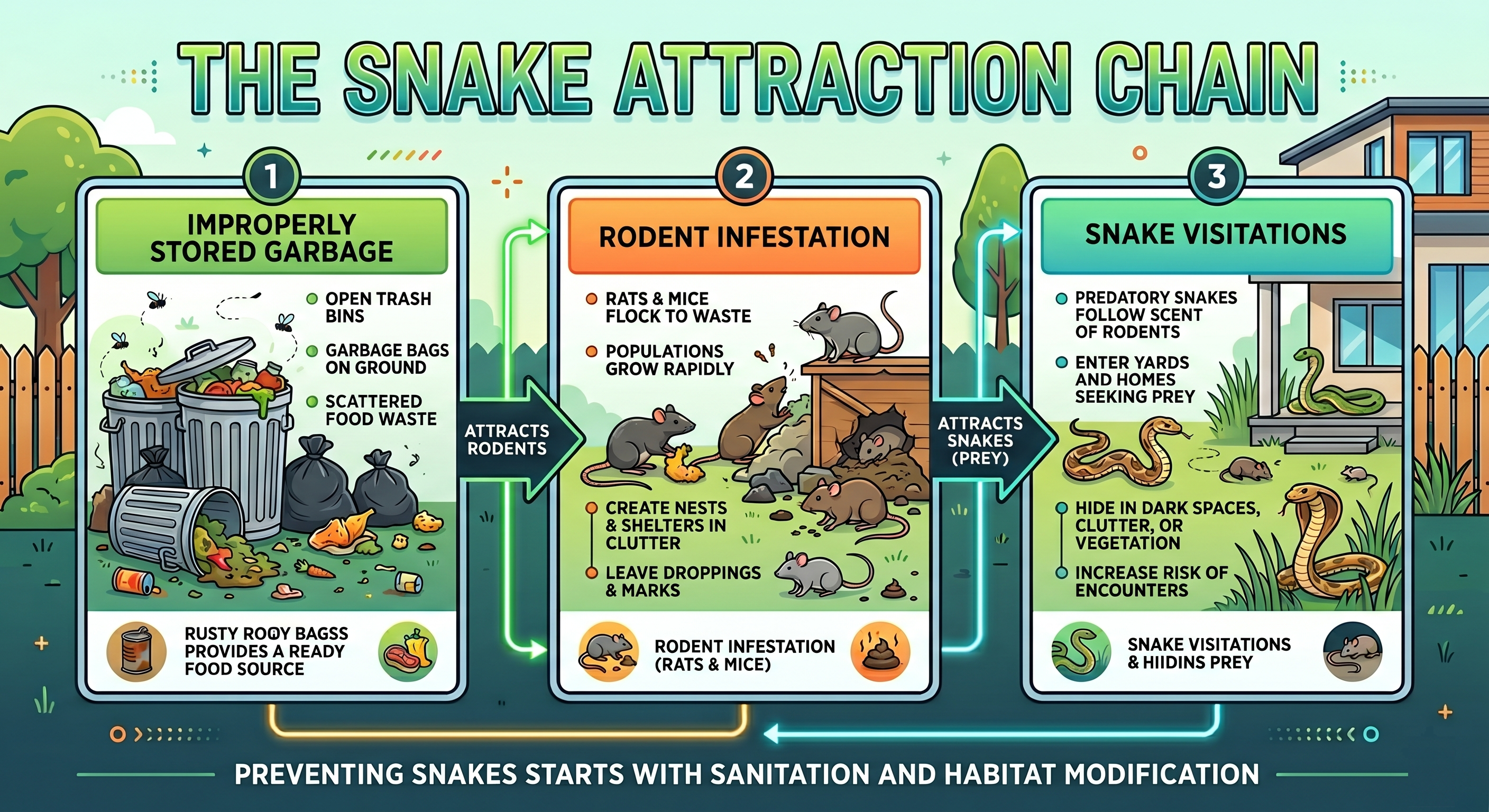
- If your backyard features accessible trash bins or bags of food waste left out overnight, you will inevitably attract mice and rats.
- This active rodent population serves as an open invitation for apex urban predators, such as reticulated pythons (Malayopython reticulatus) or monocled cobras (Naja kaouthia).
- Managing the pests at the bottom of the food chain is a process known as vector control, and it is your most powerful tool in reducing snake encounters.
How to Keep Snakes Out: Easy Outside-In Home Safety Checklist
This is an Outside-In Perimeter Audit that guides you through a step-by-step method to stop snakes from entering your home. Instead of guessing where snakes may hide, you inspect your property from the outside boundary and move inward toward the house.
Zone 1: Yard and Property Boundary
This is your first and most important layer of protection. The goal is to make your surroundings less attractive to snakes and their food sources.
- Keep grass short and tidy: Cut your lawn regularly. Tall grass gives snakes cover to hide and hunt. Trim bushes so there is at least 6 inches of clear space from the ground.
- Remove yard clutter: Do not leave piles of wood, bricks, roof tiles, or branches. These create dark, damp spaces where snakes like to rest.
- Be careful with bird feeders: Bird feeders can drop seeds on the ground, which attract rats at night. Rats then attract snakes. If you live near forests or drains, removing feeders can help break this food chain.
Zone 2: Foundation and Exterior Walls
Once snakes reach your house walls, they look for small gaps to enter.
- Protect weep holes: Weep holes are small gaps in brick walls that help drain water. However, they can also allow small snakes to enter. Do not seal them with cement. Instead, use copper mesh, which allows airflow but blocks snakes.
- Cover drainage pipes: Open drains and pipes can act as pathways for snakes and rats. Cover them with strong metal mesh (hardware cloth) and secure tightly with clamps.
Zone 3: Doors, Vents, and Gaps
This is the last line of defense before snakes enter your living space.
- Seal door gaps: Check all doors, including front, back, and garage doors. If a pencil can fit under the gap, a small snake can too. Install rubber seals or door sweeps to close these spaces.
Seasonal Risk in Malaysia
During the monsoon season, heavy rain and flooding can force snakes out of their underground burrows. They then move to higher, drier places—often residential homes. This makes proper home sealing even more important during rainy months.
This checklist helps you prevent snake entry by:
- Cleaning and modifying your yard
- Sealing walls and drains properly
- Blocking door and floor gaps
It is more effective than random snake repellents and helps keep your home safer year-round.
Further reading: DIY Pest Control Vs Professional Pest Control In Malaysia
What to Do If You See a Snake Near Your Home
Even if you take preventive steps, you may still come across a snake. If this happens, stay calm and follow these important safety tips recommended by Malaysian authorities.
Stay Calm and Do Not Disturb the Snake
Do not panic, scream, or try to hit the snake. Most snakes only attack when they feel threatened or trapped.
Slowly Move Away
Keep a safe distance of at least 3 meters. Avoid sudden movements that may scare the snake.
Keep the Snake in Sight
If the snake is inside your home, slowly leave the room while watching where it goes. If possible, close the door and block the gap underneath with a towel. This helps keep the snake in one area until help arrives.
Call 999 for Professional Help
Do not try to catch or kill the snake yourself. Many snake species in Malaysia are protected by law. Instead, call 999 for assistance from BOMBA or APM, who are trained to handle snakes safely.
Conclusion
Keeping snakes away from your home requires proper home sealing, regular yard cleaning, and removing places where snakes and rodents can hide.
Simple tasks like trimming grass and clearing debris can usually be done yourself. However, homes with large gaps, roofing problems, or serious rodent issues may need professional help. This is especially important for houses near forests, construction sites, or open land where snake activity is higher.
When DIY methods are not enough, professional pest control services can provide safer and more effective long-term protection for your family.
Visit Listing.my’s business directory to find trusted and certified professional pest control services to help you with vector control programs and to install industrial-grade exclusion barriers, to ensure your home stays safe from snake infestation.
Sources:
- Malaysia Ministry of Natural Resources and Environmental Sustainability / MyBIS: Wildlife Conservation Act 2010 (Act 716) – Establishes the protected status of native reptiles and details statutory defenses.
- CLJ Law Official Portal: Wildlife Conservation (Amendment) Act 2022 (Act A1646) – Outlines the updated penal framework and stricter enforcement penalties for wildlife violations in Malaysia.
- University of Florida IFAS Extension: Dealing with Snakes in Florida’s Residential Areas – Preventing Encounters – Peer-reviewed herpetological research verifying the complete failure of chemical repellents (sulfur/mothballs) and confirming physical exclusion methods.
- Official Report via Scoop.my / Shah Alam Fire and Rescue Department (BOMBA): Snakes in a drain: Shah Alam firefighters net 29 baby reticulated pythons – Confirms active urban emergency response frameworks for protected snakes in residential settings.
Frequently Asked Questions About Snake Prevention
1. Does pouring commercial sulfur powder (belerang) around my gate stop snakes?
No. This is a persistent myth. Snakes have highly developed sensory organs and can crawl across sulfur, mothballs, or diesel-soaked ropes without any physical harm or irritation. Physical barriers like fine mesh are the only reliable solution.
2. Why do snakes suddenly appear in residential areas during heavy rain?
In Malaysia, seasonal monsoons and flash floods fill up underground burrows, drainage systems, and old tree hollows. To survive the rising water, snakes seek dry, warm ground, which frequently leads them into residential compounds and homes.
3. Can a snake really swim up through my toilet bowl?
Yes, though it is uncommon. Snakes are excellent swimmers and can enter open sewer lines or broken septic ventilation pipes, tracking the scent of rats living in the plumbing system. Keeping your sewer ventilation pipes covered with sturdy wire mesh prevents this access entirely.
4. What size mesh should I buy to snake-proof my home vents and drainage lines?
You should use galvanized steel hardware cloth or wire mesh with openings no larger than a quarter-inch. Anything larger allows small, juvenile venomous snakes to squeeze their bodies through.
5. Is it illegal to kill a cobra or python found inside my house in Malaysia?
Pythons and cobras are protected under Malaysia’s Wildlife Conservation Act, but Section 55 allows you to legally kill them if they pose an immediate danger to human life. However, attacking a snake is highly dangerous and increases your risk of being bitten. The safest, most compliant choice is to keep your distance and call 999 for professional help from BOMBA or APM.
6. Why are bird feeders considered a risk factor for snake encounters?
Bird feeders regularly drop seeds onto the ground below. These seeds attract mice and rats to your garden at night. Because rodents are a primary food source for snakes, the bird feeder inadvertently creates a highly attractive hunting zone right outside your home.