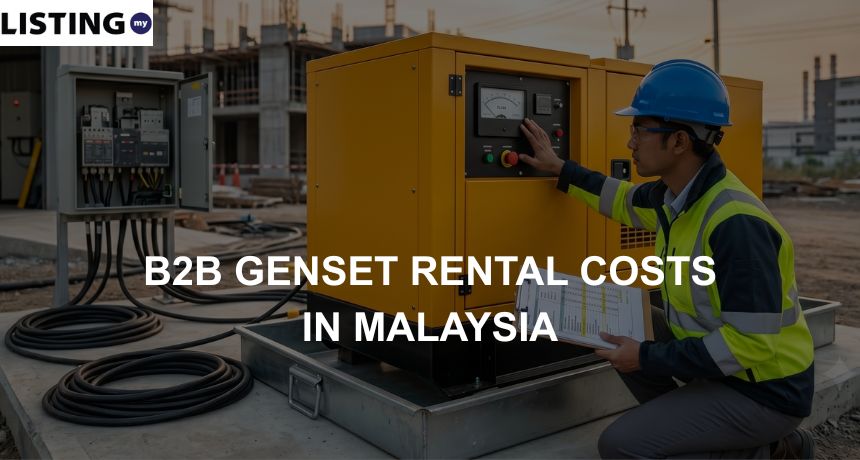
5 Additional Costs in a B2B Genset Rental Contract
Key Takeaways:
- The advertised rental price is usually not the final amount you will pay. Costs such as delivery, accessories, and extra usage charges can significantly increase the total bill.
- Keep a close eye on generator operating hours using the Hobbs Meter. If you exceed the hours included in your rental agreement, you may face additional charges.
- Important items such as Automatic Transfer Switches (ATS), power cables, and fuel containment trays are often charged separately, so do not assume they are included.
- Compliance costs should not be overlooked. In Malaysia, diesel generator operators must meet environmental and noise regulations, and failing to do so can result in penalties.
- Before signing any contract, ask for a detailed breakdown of all expected costs. This helps you budget accurately and avoid unexpected expenses during the project.
Genset rental costs encompass the complete expenditure of securing temporary power, combining the baseline equipment lease fee (dry rate) with variable ancillary expenses. These additional charges typically include mobilization logistics, fuel management, runtime overage penalties, ancillary equipment rentals (like cables and transfer switches), and local environmental compliance overheads.
Many procurement managers and facility operators see a low genset rental quote and think they are getting a great deal. However, the cheapest price is often not the true cost. Many genset rental companies in Malaysia charge separately for delivery, accessories, and extra usage.
To avoid unexpected expenses, it is important to look beyond the rental rate and understand the total cost of ownership before signing a contract.
1. Mobilization and Demobilization Costs
When comparing genset rental quotes, many businesses focus only on the monthly or daily rental rate. However, the cost of delivering, installing, and removing the generator is often not included in the advertised price.
What Are Mobilization Costs?
Mobilization costs refer to the expenses involved in transporting and setting up the generator at your site. Depending on the generator size, this may include:
- Heavy-duty transport vehicles
- Crane services
- Rigging and installation crews
- Grounding and site preparation work
These charges can add a significant amount to your total rental cost.
Demobilization Fees
Many businesses overlook demobilization costs. These are the fees charged to disconnect, remove, and transport the generator back to the rental provider after the project is completed.
In some cases, these charges are calculated at the end of the rental period and may be affected by current transport or equipment rates. As a result, the final bill can be higher than expected.
What to Ask Before Signing: Always ask your genset rental provider whether delivery, installation, removal, and transportation costs are included in the quote. Getting these costs confirmed upfront can help you avoid unexpected charges later.
2. Overage Hour Charges
Most standard single-shift genset rental contracts include a monthly operating hour limit, typically set at 200 hours (calculated as 8 hours per day across 25 working days). Extended shift agreements may offer caps between 250 and 300 hours.
The generator’s running time is tracked using a built-in device called a Hobbs Meter, which records every hour the engine operates.
What Happens If You Exceed the Hour Limit?
If your business uses the generator for longer than the hours stated in the contract, you will be charged overage fees. These extra charges help cover the additional wear and tear on the engine.
Many rental providers apply a higher rate for every extra hour used.
Example of Overage Charges
Let’s say your rental agreement includes 300 operating hours per month. If your generator runs for 400 hours, you will be charged for the additional 100 hours.
For example:
- Standard operating cost: RM30 per hour
- Overage rate multiplier: 1.5x
- Overage charge: RM45 per extra hour
In this case, 100 extra hours could add RM4,500 to your rental bill.
Unexpected events such as power outages, grid instability, or additional production shifts can cause your generator to run longer than planned. Without proper monitoring, these extra hours can quickly lead to thousands of ringgit in unplanned costs.
What to Ask Before Signing: Always confirm the monthly hour allowance and the overage rate with your genset rental provider. Understanding these charges upfront can help you avoid costly surprises later.
3. Essential Equipment That May Not Be Included
Many businesses assume a rented generator comes with everything needed for immediate operation. However, many rental providers only quote the generator itself and charge extra for important accessories and supporting equipment.
Before signing a genset rental agreement, check whether the following items are included in the quotation.
| Equipment | What It Does | What Happens If It’s Not Included |
| Automatic Transfer Switch (ATS) | Automatically switches power from the utility grid to the generator during a power outage. | Staff must switch power manually, which can cause delays and increase downtime. |
| Heavy-Duty Power Cables | Connects the generator to your building or site electrical system. | Long cable runs are often charged separately, increasing your overall rental cost. |
| Distribution Boards / Junction Boxes | Distributes electricity from the generator to different machines, offices, or work areas. | Power cannot be safely delivered to the equipment that needs it. |
| Spill Containment Trays (Bunding) | Collects diesel, oil, or coolant leaks and prevents environmental contamination. | Your site may face environmental penalties, legal issues, or even temporary shutdowns. |
What to Ask Before Signing: Request a complete list of included and excluded items from your genset rental provider. This will help you compare quotes accurately and avoid surprise charges after the generator arrives on-site.
4. Compliance and Environmental Costs
Compliance costs are often overlooked when renting a generator. If your site is near residential or commercial areas, you may need soundproof enclosures or acoustic canopies to meet noise regulations, which can increase rental costs.
Businesses operating diesel generators may also need to comply with environmental requirements including:
- Documentation
- Emissions testing
- Regulatory filings.
Failure to meet these requirements can result in penalties, project delays, or legal issues.
What to Ask Before Signing: Always confirm whether compliance-related costs are included in your rental quote before signing.
5. Load Banking and Site Testing Costs
For critical facilities such as data centers and manufacturing plants, generators often need to be tested before operation. This process, known as load banking, checks whether the generator can safely perform under full load.
The cost is usually not included in the rental fee. Businesses may be charged separately for:
- Load bank equipment
- Fuel used during testing
- Technician services.
What to Ask Before Signing: Confirm the above testing costs before signing a genset rental contract.
Further reading: Cummins, Perkins or CAT: Best Heavy-Duty Gensets Compared
Hidden Costs Based on Industrial Usage
The operational risks and hidden fees vary significantly depending on your specific industry layout:
- Construction & Infrastructure: Often suffers from high mobilization costs due to remote, uneven terrain requiring heavy crane rigging, alongside accelerated wear-and-tear charges if concrete dust or mud clogs the air filters.
- Manufacturing Plants: High exposure to the Overage Hour Compounder due to multi-shift operations and high-penalty risks under the Occupational Safety and Health (Noise Exposure) Regulations 2019 managed by DOSH if units are not properly sound-attenuated.
- Events & Commercial Venues: Drastic cost spikes from mandatory acoustic enclosures and high-frequency “wet rate” premium refueling charges during off-peak night hours.
Hidden Costs to Watch for Based by Industry
Genset rental costs can vary depending on how and where the generator is used. Different industries face different hidden charges and operational risks.
Construction & Infrastructure
Higher mobilization costs are common due to difficult site access and crane use. Dust and mud can also increase maintenance or wear-and-tear charges.
Manufacturing Plants
Multi-shift operations often lead to overage hour fees. Noise compliance under DOSH regulations may also require soundproofing, adding extra cost.
Events & Venues
Rental costs may increase due to acoustic enclosure requirements and higher fuel charges for night-time refueling.
How to Audit a Genset Rental Quote
To protect your budget, always review generator rental quotes line by line. Avoid vague or bundled pricing.
Ask for a clear breakdown of all costs including:
- Delivery
- Installation
- Technical labour
- Accessories
- Overage fees
A good provider, like [Brand], should give a full Total Cost of Ownership (TCO) estimate upfront so you can see all expected charges before signing.
Also compare Wet Rate options, which include fuel management, with Dry Rate deals that exclude fuel and may lead to extra costs from fuel price changes and handling fees.
Conclusion
Unexpected cost in genset rental contracts can be avoided by using a Total Cost of Ownership (TCO) approach instead of only comparing rental prices. Businesses should take into account mobilization costs, monitor usage with the Hobbs meter, check for unbundled equipment, and consider DOE compliance requirements.
When sourcing for heavy-duty power generator sets in Malaysia, choosing trusted suppliers is important.
Our trusted business directory helps companies find reliable genset rental providers, compare credentials, and work with partners that offer transparent, itemized pricing from the start. Browse and select your preferred genset rental company on our platform today.
Sources:
- Department of Environment (DOE) / Laws of Malaysia: Environmental Quality Act 1974 (Act 127) and the newly enforced Environmental Quality (Amendment) Act 2024. DOE Official Portal / Legal Analysis of Environmental Bill Amendments
- Department of Occupational Safety and Health (DOSH) Malaysia: Occupational Safety and Health (Noise Exposure) Regulations 2019 and its Industry Code of Practice (ICOP) for Management of Occupational Noise Exposure. DOSH Official ICOP Registry
- Department of Environment (DOE) Malaysia: Environmental Quality (Clean Air) Regulations 2014 (P.U. (A) 151), specifically Regulation 5 (“Obligation to Notify”) for fuel-burning equipment. eSWIS DOE Helpdocs
Frequently Asked Questions About Genset Rental Costs
1. What is the difference between a Dry Rate and a Wet Rate in a genset rental?
A dry rate covers the physical lease of the generator unit alone; you are entirely responsible for sourcing fuel, monitoring levels, and managing spills. A wet rate is an all-inclusive service contract where the supplier handles fuel delivery, refueling logistics, and operational maintenance, giving you highly predictable operational costs.
2. How do overage charges work if my project operates 24/7?
Most standard contracts are structured around a single-shift baseline of 200 hours a month. If your project operates 24/7, you will rapidly exceed this threshold. This triggers overage fees, which apply an increased hourly penalty multiplier (often 1.5x the baseline dry rate) to every extra hour recorded on the Hobbs meter beyond your contract terms.
3. Do I need legal permission to run a rented diesel generator in Malaysia?
Yes. Under Regulation 5 of the Environmental Quality (Clean Air) Regulations 2014, industrial occupiers must submit a prior written notification to the Director General of the Department of Environment (DOE/JAS) before installing any fuel-burning equipment that serves as a new source of emission.
4. Why isn’t the Automatic Transfer Switch (ATS) included in the base quote?
Many rental companies unbundle the ATS because not all clients require automatic power restoration. For example, a construction site may only need manual startup, whereas a manufacturing plant or data center requires immediate, automated power transfer to prevent catastrophic data or product loss.
5. What are the penalties if my generator violates local noise standards?
Under Section 23 of Malaysia’s Environmental Quality Act 1974—heavily upgraded by the Environmental Quality (Amendment) Act 2024—emitting noise above acceptable DOE thresholds without a license is a serious offense. It carries a mandatory minimum fine of RM10,000 and a maximum fine of RM250,000, along with potential imprisonment terms up to 5 years. Continuing offenses face a daily default penalty of RM1,000, alongside emergency stop-work orders or site shutdowns by local municipal councils.
6. Who is responsible for cleanup costs if a rented generator leaks diesel?
Unless explicitly stated otherwise in a comprehensive maintenance agreement, the lessee (your company) retains operational custody of the unit. You are responsible for providing spill containment bunds and covering any site remediation or environmental fines if fuel leaks into public drains or soil.