10 Things to Consider Before Buying Furniture in Malaysia

Key Takeaways
- Measure your available floor space, doorways, lifts and staircases before purchasing large furniture.
- Choose furniture materials that suit Malaysia’s humid climate and your household’s maintenance habits.
- Factor delivery, assembly, maintenance and potential replacement costs into your overall budget.
- Prioritise everyday functionality, comfort and durability over passing interior design trends.
- Check the furniture store’s warranty, return policy and after-sales support before making payment.
Buying furniture in Malaysia involves considering your budget, available space, intended purpose, material quality, comfort, maintenance requirements and delivery arrangements. The right furniture should complement your property, accommodate your daily activities and provide lasting value without creating unnecessary expenses.
Whether you are furnishing your first condominium, renovating a terrace house, replacing an ageing sofa or setting up a home office, a little preparation can help you avoid expensive purchasing mistakes.
Here are 10 important things to consider before committing to your next furniture purchase.
1. The Purpose of Buying the Furniture
Start by identifying what you need the furniture to accomplish. A piece designed for occasional use may have very different requirements from one you rely on every day.
For example, a dining table used exclusively during meals has different requirements from one that doubles as a workstation, homework area and family gathering space.
| Purpose | What to Prioritise |
| Everyday household use | Comfort, durability and easy maintenance |
| Home office | Ergonomics, adjustability and storage |
| Rental property | Affordability and ease of replacement |
| Guest room | Flexibility and space efficiency |
| Commercial office | Durability, functionality and consistent design |
| Outdoor area | Weather and moisture resistance |
Your purchasing priorities should also reflect how long you intend to use the furniture.
Someone renting an apartment for two years may benefit from lightweight, modular furniture, while a homeowner planning to settle down permanently may find greater value in investing in durable, repairable pieces.
2. Available Space and Room Layout
Furniture should fit comfortably within your property while leaving enough room for movement, cleaning and everyday activities.
This is particularly important for Malaysian condominium and apartment owners, where living rooms may need to accommodate several functions within a limited floor area.
Before visiting a furniture store, measure:
- Room length, width and ceiling height.
- Available wall and floor space.
- Door and window positions.
- Existing furniture dimensions.
- Space required to open drawers and cabinet doors.
- Walking paths between rooms.
Example: Choosing a Sofa for a Small Condominium
Assume your living room is 3 metres wide. You intend to purchase a sofa with a depth of 95 cm and a coffee table that is 60 cm wide.
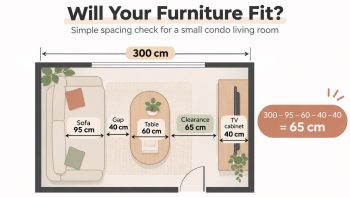
The remaining 105 cm must accommodate any television cabinet, additional furniture and walking space.
Adding a 40 cm-deep television cabinet would reduce the remaining clearance to just 65 cm, potentially making the room feel cramped.
Use masking tape on the floor to mark out furniture dimensions before purchasing. This makes it easier to visualise the layout than relying solely on photographs or showroom displays.
3. Your Budget and the Total Cost of Ownership
Set a furniture budget that accounts for the full purchase cost, including expenses that may appear after checkout.
Two furniture stores selling similar products at different prices may offer considerably different value once additional charges are included.
Example: Comparing Two Furniture Purchases
| Expense | Furniture Store A | Furniture Store B |
| Sofa price | RM1,500 | RM1,700 |
| Delivery | RM150 | Included |
| Assembly | RM100 | Included |
| Old furniture removal | RM80 | Included |
| Total cost | RM1,830 | RM1,700 |
Illustrative prices for comparison purposes only.
Although Store A advertises a lower selling price, Store B costs RM130 less overall.
You should also consider how frequently furniture may need repairs or replacement. An inexpensive dining chair that develops loose joints after prolonged use could cost more over time than a sturdier alternative.
When furnishing an entire property, prioritise purchases that directly affect your everyday comfort, such as mattresses, sofas, dining furniture and office chairs. Decorative furniture can be purchased gradually as your budget allows.
4. Furniture Materials and Malaysia’s Climate
Choosing suitable furniture materials can reduce maintenance requirements and help minimise premature deterioration.
According to the Malaysian Meteorological Department (METMalaysia), Malaysia experiences consistently warm temperatures, high humidity and abundant rainfall. These conditions can affect furniture, particularly in properties with limited ventilation or prolonged exposure to moisture.
Different materials offer different advantages and limitations.

For kitchens, laundry areas and covered balconies, prioritise materials with suitable moisture resistance.
For bedrooms and living rooms without regular air conditioning, consider breathable upholstery, adequate ventilation around cabinets and furniture that is easy to clean.
Always ask the furniture store about the actual material specifications. A wood-effect finish does not necessarily mean the furniture is made from solid wood.
5. Comfort and Ergonomics
Comfort becomes increasingly important when purchasing furniture that you will use for several hours each day.
A beautifully designed sofa may provide insufficient back support, while an attractive office chair may become uncomfortable during a full working day.
Different furniture categories require different comfort checks.
Sofas
- Seat height and depth.
- Cushion firmness.
- Backrest and armrest support.
- Ease of sitting down and standing up.
Mattresses and Beds
- Firmness and sleeping position compatibility.
- Motion isolation for couples.
- Mattress ventilation.
- Bed frame stability.
Office Furniture
- Adjustable chair height.
- Adequate lumbar support.
- Sufficient legroom beneath the desk.
- Comfortable working height.
- Ability to rest your feet flat on the floor or a footrest.
Regular movement breaks and changes in sitting position can also help reduce discomfort during prolonged working hours.
Whenever possible, test furniture at a physical showroom before purchasing. Sit in your normal position and simulate how you would use the furniture at home.
For households with elderly family members, avoid purchasing excessively low sofas or beds that may make sitting down and standing up more difficult.
6. Build Quality and Durability
The quality of furniture depends on its construction, materials, finishing and hardware. A higher price does not automatically guarantee better durability.
Inspect the areas that experience frequent movement, pressure or weight.
| Furniture Type | What to Inspect |
| Dining table | Leg stability, joints and surface finish |
| Sofa | Frame stability, stitching and cushion recovery |
| Wardrobe | Hinges, drawer runners and panel thickness |
| Bed frame | Centre support, slats and connection points |
| Office chair | Adjustment mechanisms, base and castors |
| Bookshelf | Shelf support, load capacity and overall stability |
Open and close drawers several times. Check whether cabinet doors align properly and whether tables or chairs wobble when pressure is applied.
For furniture purchased online, request detailed photographs, material descriptions and weight capacity specifications where relevant.
Securely anchor tall cabinets and bookshelves to the wall according to the manufacturer’s instructions to reduce tipping risks, particularly in households with young children.
7. Furniture Design and Compatibility With Your Interior
When choosing furniture in Malaysia, consider how each piece will complement your existing interior, lighting, flooring and colour scheme.
A furniture set that looks attractive under showroom lighting may appear noticeably different inside your home.
Interior styles you may consider include:
| Interior Style | Suitable Furniture Characteristics |
| Minimalist | Clean lines, neutral colours and simple shapes |
| Scandinavian | Light wood, soft fabrics and functional designs |
| Japandi | Natural textures, muted colours and understated finishes |
| Contemporary | Streamlined shapes and coordinated materials |
| Industrial | Metal frames, darker finishes and textured wood |
| Traditional | Rich wood tones and decorative detailing |
You do not need to purchase everything from the same furniture collection. However, maintaining a consistent colour palette or material theme can help create a more cohesive interior.
If you expect to redecorate in the future, neutral-coloured furniture may offer greater flexibility. Accessories such as rugs, cushions and curtains are often easier and cheaper to replace than an entire sofa or dining set.
8. Maintenance and Lifestyle Compatibility
Consider how much time and effort you are willing to spend maintaining your furniture.
A white fabric sofa may suit a quiet household but become difficult to maintain in a home with young children, pets or frequent visitors.
Your lifestyle should influence your furniture selection.
| Household Situation | Furniture Features to Consider |
| Families with young children | Washable covers, rounded edges and wipe-clean surfaces |
| Pet owners | Tightly woven fabrics and removable covers |
| Busy working professionals | Low-maintenance surfaces |
| Elderly residents | Stable furniture and accessible storage |
| Frequent entertainers | Extendable tables and flexible seating |
| Homes with limited storage | Multifunctional furniture and built-in compartments |
Maintenance requirements also vary between furniture finishes.
Glass tables may show fingerprints easily, glossy cabinets can reveal scratches, and certain natural wood finishes require periodic care.
Before purchasing, ask whether replacement covers, cushions, hinges or other components are available. Being able to replace an individual component could extend the usable life of the furniture.
9. Delivery, Assembly and Property Accessibility
Another important consideration when buying furniture in Malaysia is whether the furniture can physically enter your property.
This is especially relevant for high-rise condominiums, older apartments and landed houses with narrow staircases.
Before confirming your order, check:
- Main entrance and bedroom doorway dimensions.
- Lift door width and internal lift dimensions.
- Staircase width and turning space.
- Condominium management’s delivery hours.
- Service lift booking requirements.
- Delivery coverage and additional charges.
- Assembly and installation arrangements.
Some condominium management offices may also require advance registration, a refundable deposit or designated loading bay arrangements.
Ready-Assembled vs Flat-Pack Furniture
| Consideration | Ready-Assembled Furniture | Flat-Pack Furniture |
| Transportation | Can be bulky | Often easier to transport |
| Narrow entrances | May be difficult to accommodate | Often easier to fit through narrow entrances |
| Assembly | Minimal or unnecessary | Required |
| Moving house | May be more challenging | May be dismantled, depending on construction |
| Additional costs | Potential handling charges | Potential assembly charges |
If you live in Sabah, Sarawak or outside major urban centres, confirm delivery availability and transportation costs before ordering from furniture retailers elsewhere in Malaysia.
Ask for the furniture’s packaged dimensions as well as its assembled dimensions, particularly when ordering large items online.
10. Furniture Store Reputation, Warranty and After-Sales Service
A reliable furniture store should provide clear product information, transparent pricing, reasonable delivery arrangements and accessible after-sales support.
Before making payment, check recent customer reviews for recurring concerns such as delayed deliveries, damaged products, incorrect orders or difficulties obtaining warranty support.
You should also confirm:
- Warranty duration and covered components.
- Return and exchange conditions.
- Procedures for reporting delivery damage.
- Availability of replacement parts.
- Cancellation terms for custom-made furniture.
- Responsibility for transportation costs during warranty claims.
Pay particular attention to what the warranty actually covers. A five-year sofa frame warranty, for example, may exclude upholstery, cushion deterioration and accidental damage.
What If Your Furniture Arrives Damaged or Defective?
Malaysia’s Consumer Protection Act 1999 provides statutory guarantees for qualifying consumer purchases, including requirements relating to acceptable product quality.
These protections are separate from retailer warranties, and consumers may still have statutory rights after a warranty expires, depending on the circumstances.
Eligible consumers may also seek redress through the Tribunal for Consumer Claims Malaysia (TTPM), which handles qualifying claims of up to RM50,000 that accrue within three years.
These tribunal provisions apply to eligible personal and household purchases rather than furniture purchased for business purposes or under a company’s name.
Keep your receipts, order confirmations, warranty documents, delivery photographs and correspondence with the furniture store in case a dispute arises.
Furniture Buying Checklist for Malaysian Buyers
Before placing your order, use this checklist to determine whether the furniture meets your requirements.
| Consideration | Question to Ask Yourself |
| Purpose | Does the furniture serve my intended needs? |
| Space | Will it fit without restricting movement? |
| Budget | Can I afford the total cost, including delivery? |
| Materials | Is it suitable for my property’s environment? |
| Comfort | Will it remain comfortable during prolonged use? |
| Durability | Is the construction suitable for frequent use? |
| Design | Does it complement my existing interior? |
| Maintenance | Can I maintain it without excessive effort? |
| Delivery | Can it enter my property without complications? |
| Warranty | What happens if the furniture develops a defect? |
If you cannot confidently answer several of these questions, consider delaying the purchase until you have sufficient information.
Buying furniture gradually can also help you understand how you use your space before committing to additional pieces.
Think Thoroughly Before Buying Furniture
Buying furniture in Malaysia requires balancing affordability, functionality, comfort, durability and your property’s available space. Taking the time to compare materials, measure your rooms and understand the retailer’s after-sales policies can help you avoid unnecessary expenses and make more confident purchasing decisions.
Looking for furniture stores near you? Discover local retailers, furniture suppliers and other home furnishing businesses through Listing.my, our Malaysian business listing platform.
Frequently Asked Questions About Considerations Before Buying Furniture in Malaysia
Is It Better to Buy Furniture Online or In-Store in Malaysia?
Online furniture stores offer convenience and easier price comparisons, while physical showrooms allow you to inspect materials, dimensions and comfort. Consider visiting a showroom before ordering expensive items such as sofas, mattresses and ergonomic chairs.
What Furniture Should I Buy First When Moving Into a New House?
Prioritise mattresses, bed frames, essential seating, dining furniture and basic storage. Purchase decorative cabinets, accent chairs and other non-essential items after determining how you use your new living space.
Is Custom-Made Furniture Worth Buying in Malaysia?
Custom-made furniture can be worthwhile for irregular room layouts, limited storage space or specific design requirements. However, it may involve higher costs, longer production times and stricter cancellation or return conditions.
When Is the Best Time to Buy Furniture in Malaysia?
There is no single best time to buy furniture in Malaysia. Retailers may offer promotions during Chinese New Year, Hari Raya, year-end sales, clearance events and home furnishing exhibitions.
Compare final purchase prices, product specifications and warranty coverage rather than relying on advertised discounts alone.
Is Second-Hand Furniture Worth Buying?
Second-hand furniture can offer good value, particularly for solid wood tables, cabinets and other durable pieces. Inspect for termite damage, mould, structural weaknesses, unpleasant odours and potential pest infestations before purchasing.
Should I Buy Furniture Before Renovating My House?
Select furniture dimensions and styles during renovation planning, but consider scheduling delivery after major renovation work is completed. This reduces the risk of dust contamination, accidental damage and measurement discrepancies caused by changes to the final layout.