10 Best Low Maintenance Flowers in Malaysia
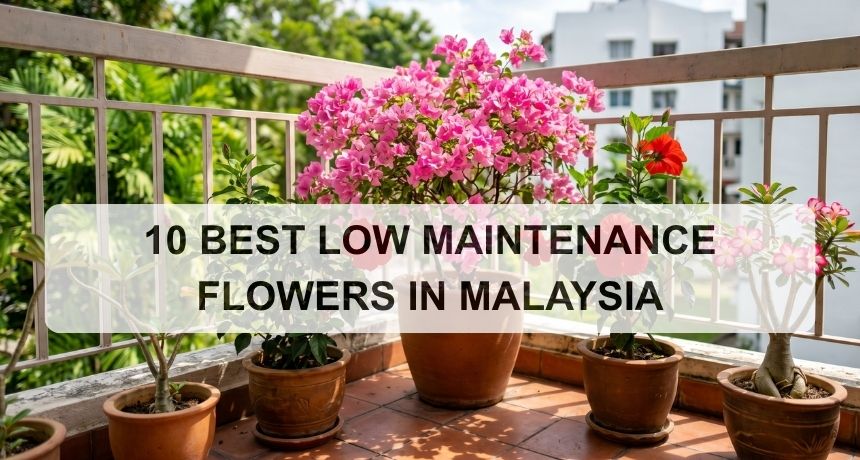
Key Takeaways:
- Tanah Bakar (burnt soil) is often superior to standard potting mixes in Malaysia because it prevents root rot during the monsoon.
- A high-rise balcony faces different challenges (wind and heat traps) than a landed garden (soil pests and afternoon shade).
- Most low-maintenance flowers need at least 6 hours of sunlight but benefit from some sun-intensity protection during the peak 12 PM to 3 PM window.
- Success in Malaysian gardening depends on choosing plants that can handle the rain-heat cycle without needing constant intervention.
- Always check if a plant is a lowland species. Highland plants from places like Cameron Highlands rarely survive long in the humidity of the Klang Valley.
Low maintenance flowers in Malaysia are hardy, lowland-adapted species capable of withstanding high humidity, intense UV exposure, and heavy seasonal rainfall. These plants, such as Bougainvillea, Hibiscus, and Adenium, require minimal pruning and thrive in well-draining soil like Tanah Bakar (Red Burnt Soil) with basic NPK fertilization.
Whether you live in a condo or a landed house in Malaysia, gardening can be challenging because of the hot weather. Many beginners buy beautiful plants from cooler countries, only to see them dry out in the 32°C heat or get damaged by heavy rain. Some also turn to florists in Malaysia for guidance and better-suited plant choices for local conditions.
If you think you are bad at gardening but still want a colourful and lively home, this guide is for you. We will focus on hardy flowers that grow well in Malaysia’s weather and need very little care.
Understanding Malaysian Gardening and Tropical Weather
Hot and Dry Weather in Malaysia
During hotter months like February and June, the sun can dry out plant pots very quickly. In some cases, the soil can lose moisture within a few hours. Plants that cannot handle heat may dry up or become weak.
Heavy Rain and Monsoon Problems
During the monsoon season, heavy rain can leave plants sitting in water for days. If the soil does not drain water properly, the roots may not get enough air. This can cause root rot, fungus growth, and unhealthy plants.
Tanah Bakar vs Standard Potting Soil
Standard Potting Soil
Many standard potting mixes contain peat or coco peat, which can hold a lot of water like a sponge. While this works well in cooler or drier countries, it may keep plants too wet during Malaysia’s rainy season.
What Is Tanah Bakar?
Tanah Bakar, also known as burnt soil, is commonly sold at plant nurseries across Malaysia. It is made from clay-based soil that has been heated or “fired.”
Why Tanah Bakar Is Popular in Malaysia
Tanah Bakar is a popular choice for Malaysian gardening because it stays loose and drains water quickly. It also creates small air pockets in the soil, helping plant roots breathe better. This reduces the risk of root rot and fungus, making it ideal for low maintenance plants and flowers in Malaysia.
Choosing Plants for High-Rise or Landed Homes in Malaysia
Before buying plants, it is important to understand your home environment or “living zone.” Different homes in Malaysia have different gardening challenges.
- High-Rise Balcony Gardening: High-rise balconies are often hot and windy, causing soil to dry quickly. Choose low maintenance potted plants that can handle heat and strong winds.
- Landed House Gardening: Landed homes have more space for large plants and flowering bushes, but they may attract pests like snails and ants. Choose hardy plants that suit Malaysia’s weather.
10 Best Low Maintenance Flowers in Malaysia
This guide helps you choose easy-care flowers that grow well in Malaysia’s hot sun, high humidity, and heavy rain. Each plant is rated using the HSD Guide:
- H = Humidity Needs (High / Medium / Low)
- S = Sun Exposure (Full Sun / Partial Shade / Shade)
- D = Drainage Requirement (High / Moderate)
1. Bougainvillea (Bunga Kertas)
A very tough flowering plant that thrives well in the heat. It blooms more when slightly neglected and dislikes overwatering.
HSD Guide: Low | Full Sun | High
Best for: Sunny balconies, gateposts
2. Hibiscus (Bunga Raya)
Hibiscus is Malaysia’s national flower. It is easy to grow in the ground, tolerates humidity well, and produces large vibrant blooms with minimal maintenance.
HSD Guide: High | Full Sun | Moderate
Best for: Landed gardens, hedges
3. Adenium (Desert Rose)
Adenium is a succulent-like plant with a water-storing trunk, survives long dry periods, and blooms beautifully in hot, sunny, low-water conditions.
HSD Guide: Low | Full Sun | Very High
Best for: High-rise balconies
4. Vinca (Tapak Dara / Periwinkle)
Vinca or periwinkle are fast-growing flowering plant that self-seeds easily. The plant thrives in pots, and produces continuous small blooms with very little care.
HSD Guide: Medium | Full Sun / Partial | High
Best for: Small pots, windowsills
5. Lantana
Lantana is a very tough plant with colourful clustered flowers, highly resistant to pests, and attracts butterflies, and grows easily in hot climates.
HSD Guide: Medium | Full Sun | Moderate
Best for: Hanging baskets, ground cover
6. Ixora (Bunga Jejarum)
Ixora is a popular hedge plant in Malaysia, tolerates heat and rain well, produces dense flower clusters, and requires almost no special care.
HSD Guide: High | Full Sun / Partial | Moderate
Best for: Porches, fences
7. Peace Lily (Spathiphyllum)
Peace Lily is a low-light indoor plant that clearly droops when thirsty, making it beginner-friendly and easy to maintain with simple watering routines.
HSD Guide: High | Shade / Partial | Moderate
Best for: Indoor and shaded areas
8. Jasmine (Bunga Melur)
Jasmines are fragrant climbing plants that grow quickly, bloom regularly in warm weather, and are highly resistant to common pests and diseases.
HSD Guide: High | Full Sun | Moderate
Best for: Trellises, gardens
9. Mexican Petunia (Ruellia)
Mexican Petunia is a fast-spreading plant with purple trumpet flowers, thrives in heavy rain, fills garden gaps easily, and requires minimal upkeep.
HSD Guide: High | Full Sun / Partial | Moderate
Best for: Filling garden spaces
10. Portulaca (Japanese Rose)
Portulaca or Japanese Rose is a drought-tolerant succulent-like flower that blooms in strong sunlight, propagates easily from cuttings, and grows well in shallow pots or balconies.
HSD Guide: Low | Full Sun | High
Best for: Balcony pots, ground cover
These low maintenance flowers in Malaysia are perfect for beginners who want a colourful garden without complicated care routines.
Further reading: How to Choose Flowers for Corporate Events
Pro Tips for Low Maintenance Gardening in Malaysia
These simple tips help beginners keep plants healthy in Malaysia’s hot sun, haze, and tropical weather.
1. Sun Protection for Hot Balconies
In Malaysia, the UV index is highest between 11 AM and 4 PM. If your balcony faces West, your plants endure the afternoon high sun-intensity. This can cause leaf edges to turn dry and crispy. If you notice yellowing, move plants slightly inward or use a 50% black netting to filter the harshest rays.
2. Haze Season Plant Care
During haze periods in Malaysia, dust can settle on plant leaves. This blocks stomata, which are tiny openings plants use to “breathe” and absorb sunlight.
Easy fix: Wipe leaves once a week using a damp cloth or spray water gently. This helps plants stay clean and healthy for better growth.
3. Simple Fertiliser Feeding
Many nurseries sell Baja Bunga (flower fertiliser), usually NPK 12-12-17. It helps plants grow stronger and bloom better.
How to use: Add about half a teaspoon for medium pots every two weeks. Sprinkle it around the soil edge, not directly on the stem, to avoid plant damage.
Conclusion
Gardening in Malaysia doesn’t have to be difficult. Choosing hardy survivor plants like Bougainvillea or Adenium and using suitable soil such as Tanah Bakar, can still let you grow a healthy garden even as a beginner.
The most important step is matching the right plant to your living space, whether it is a high-rise balcony or a landed home.
If you are starting your gardening journey and need quality plants or supplies, check out our online business directory. We list verified florists, making it easier for you to find reliable florists and gardening resources near you.
FAQs
1. How often should I water my plants in Malaysia?
Usually once a day, early in the morning. However, always check the soil with your finger. If it’s still damp, wait. During the monsoon, you may only need to water once every three days.
2. Why do my flowers keep dying after I bring them home from the nursery?
They are likely in nursery shock. Keep them in a shaded spot for 3-5 days before moving them into full sun. Also, check if they are Highland plants; if they are, they won’t survive the lowland heat.
3. Is Tanah Merah good for flowers?
Tanah Merah (Red Soil) is very clay-heavy. It’s better for large trees in the ground. For pots, mix it with sand or use Tanah Bakar to improve drainage.
4. What is the best fertilizer for flowering plants in Malaysia?
Look for NPK 12-12-17 (typically blue pellets). The “17” represents Potassium, which is the key ingredient for vibrant blooms. For organic options, processed chicken manure (Baja Tinja Ayam) is excellent but should be used sparingly due to its high heat/nitrogen content.
5. Can I grow these flowers in a condo balcony?
Yes, but focus on Adenium, Portulaca, and Vinca. Avoid large bushes like Hibiscus unless you have a very large planter and plenty of sunlight.
6. How do I prevent mosquitoes in my garden?
The best way is to eliminate standing water in pot saucers. If you must use saucers, add Abate sand (Temephos) to the water. However, keep Abate away from pets and do not use it in pots where you grow edible herbs, as it is a chemical pesticide. For a natural alternative, try dropping a small piece of “Bunga Cengkih” (clove) into the water to deter larvae.