Marble vs Granite: Which is Best for Malaysian Homes?
Key Takeaways
- Marble offers premium aesthetics but requires higher maintenance in Malaysia’s humid climate
- Granite is more durable, heat-resistant, and better for heavy-use kitchens
- The right choice depends on use case, not just appearance
- Malaysia’s “wet kitchen” culture makes granite more practical for daily cooking
- Lifecycle cost often favors granite despite similar upfront pricing
Choose marble for low-traffic, design-focused areas where aesthetics matter and choose granite for high-use, heavy-cooking spaces where durability and low maintenance are essential.
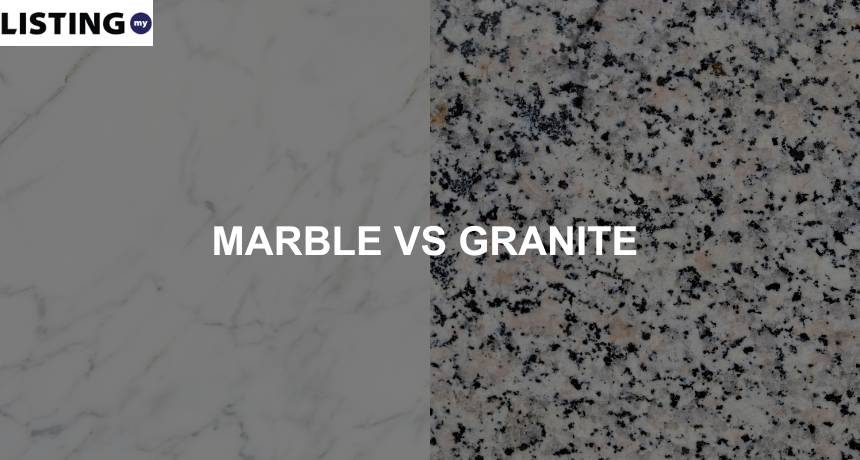
Marble is a metamorphic stone formed from limestone, known for its soft veining and luxurious appearance.
Granite, on the other hand, is an igneous rock formed from cooled magma, making it denser and more resistant to wear.
In practical terms, this means marble is more porous and prone to staining, while granite is harder and better suited for high-traffic or high-use areas.
For Malaysian homes, this distinction becomes even more important due to humidity, cooking habits, and long-term maintenance considerations. So let’s talk about it.
Marble vs Granite: Comparison Table
Factor | Marble | Granite |
| Appearance | Soft veining, elegant | Speckled, more uniform |
Durability | Softer, prone to scratches | Very hard, scratch-resistant |
| Porosity | High (absorbs liquids easily) | Low (more stain-resistant) |
Maintenance | Requires frequent sealing | Lower maintenance |
| Heat Resistance | Moderate | High |
Cost (Malaysia) | Mid to high | Mid to high |
| Best Use Case | Bathrooms, feature areas | Kitchens, countertops, flooring |
Which Is Better for Kitchens in Malaysia?
Granite is generally the better choice for Malaysian kitchens, especially for wet kitchens with heavy cooking.
In Malaysia, many households separate their kitchens into:
- Wet kitchen (heavy cooking, frying, spices)
- Dry kitchen (light use, aesthetic focus)
Granite performs better in wet kitchens because:
- It resists oil stains and acidic spills
- It withstands high heat from pots and pans
- It requires less frequent maintenance
Marble, while beautiful, is more likely to:
- Stain from turmeric, soy sauce, or oil
- Develop etching from acidic ingredients like vinegar or lime
- Require regular resealing to maintain its appearance
If you cook daily with strong spices and oils, granite will hold up significantly better over time.
Is Marble Suitable for Bathrooms and Feature Areas?
Yes, marble is ideal for low-impact areas where aesthetics matter more than durability. Hence why, many showrooms and visuals displays of marble are always in cool bathroom settings.
Marble works well in:
- Bathroom vanities
- Feature walls
- Flooring in low-traffic bedrooms
These areas typically have:
- Less exposure to oil and acids
- Lower risk of heavy impact or scratching
Marble is often used to create a luxury hotel-style look, especially in master bathrooms or living room feature walls.
However, proper sealing is still important due to humidity and water exposure.
What about common areas?
For most homes, granite is the safer and more practical choice for common areas, while marble is best reserved for low-traffic, design-focused spaces.
Common areas such as living rooms, hallways, and walkways experience consistent foot traffic, furniture movement, and daily wear.
Over time, this exposes the difference between the two materials: durability vs surface sensitivity.
Granite performs better in these environments because it is harder and more resistant to scratches, making it ideal for:
- Family homes with children or pets
- High-traffic walkways and corridors
- Areas where furniture is frequently moved
Marble, while visually striking, is softer and more prone to:
- Surface scratches from dust, sand, or footwear
- Dull patches forming in high-traffic zones
- Higher maintenance to preserve its polished look
That said, marble still has a place in common areas, particularly in:
- Formal living rooms with lighter usage
- Luxury condos where aesthetics are prioritised
- Statement flooring where maintenance is expected and managed
If the space is used daily and heavily, granite will age better and require less upkeep. If the goal is to create a premium, hotel-like ambiance in a controlled environment, marble can deliver stronger visual impact but comes with higher long-term care requirements.
How Does Malaysia’s Climate Affect Your Choice?
Malaysia’s high humidity and heat amplify the weaknesses of marble and highlight the strengths of granite.
Environmental Factors
- Humidity: Increases risk of moisture absorption and staining in porous materials like marble
- Heat: Granite performs better under high temperatures
- Cooking culture: Frequent use of oil, spices, and acidic ingredients
The impact is significant too.
Factor | Marble Score | Granite Score |
Humidity Resistance | Low | High |
| Cooking Suitability | Low | High |
Maintenance Ease | Low | High |
| Aesthetic Appeal | High | Medium |
Which Option Has Lower Long-Term Cost?
Granite typically has a lower lifecycle cost due to reduced maintenance and higher durability.
While marble and granite may have similar upfront costs in Malaysia, the long-term expenses differ.
5–10 Year Cost Considerations
Cost Factor | Marble | Granite |
Sealing frequency | Frequent | Occasional |
| Repair risk | Higher | Lower |
Replacement risk | Moderate to high | Low |
| Maintenance cost | Higher overall | Lower overall |
Marble’s hidden cost is not the purchase price, but the ongoing upkeep and risk of damage.
Common Mistakes Malaysian Homeowners Make
Many homeowners focus too heavily on showroom aesthetics, without factoring in Malaysia’s real-world conditions like humidity, cleaning habits, and daily usage patterns.
Choosing marble for high-traffic common areas
Marble flooring in living rooms or hallways may look premium initially, but can dull, scratch, and lose shine faster under daily foot traffic, especially with dust particles brought in from outside.
Underestimating maintenance in a humid climate
Malaysia’s humidity accelerates moisture absorption in porous materials, making regular sealing and proper cleaning more critical than many expect
Using the wrong cleaning methods or chemicals
Acidic cleaners, which are still commonly used in some households, can cause etching on marble surfaces and permanently damage the finish.
Not accounting for lifestyle usage
High foot traffic from family living, frequent guests, or even footwear habits can significantly affect how marble or granite ages over time
Poor installation and finishing quality
Uneven laying, improper grouting, or lack of sealing, often due to inexperienced contractors, can lead to long-term issues regardless of material choice
Confusing natural stone with engineered surfaces
Many homeowners assume marble and granite behave like quartz or solid surface, leading to unrealistic expectations around durability and maintenance.
How to Choose Based on Your Lifestyle
Let’s wrap things up and say the best choice depends on how you use your home, not just how you want it to look.
Choose Marble if:
- You prioritize aesthetics and luxury
- The area is low-traffic or decorative
- You are willing to maintain and reseal regularly
Choose Granite if:
- You cook frequently
- You want a low-maintenance surface
- You need durability for long-term use
Why Material Selection Alone Isn’t Enough
Even the best material can fail if it is poorly sourced, fabricated, or installed.
Factors that affect performance:
- Quality of the slab
- Cutting and fabrication precision
- Proper sealing during installation
- Ongoing maintenance guidance
This is where working with experienced suppliers or contractors becomes critical, especially for custom countertops or large-scale installations.
At listing.my, we have a curated selection of the best marble stone suppliers in Johor, who also sell granite and other stone materials. If you’re eager to get your hands on the best stone possible, check our business directory out!
Frequently Asked Questions About Marble vs Granite
Is Marble More Expensive Than Granite In Malaysia?
Not necessarily. Prices are often similar, but marble can become more expensive over time due to maintenance and repairs.
Which is better for a wet kitchen, marble or granite?
Granite is better due to its resistance to heat, stains, and heavy usage.
Does granite need sealing in Malaysia?
Yes, but less frequently than marble. Periodic sealing helps maintain stain resistance.
Can marble be used for kitchen countertops?
It can, but it is not recommended for heavy-use kitchens due to staining and etching risks.
What is the most low-maintenance option?
Granite is generally more low-maintenance compared to marble.
Is granite suitable for outdoor use in Malaysia?
Yes, granite performs well outdoors due to its durability and resistance to weather conditions.