Solar Pre-Installation Checklist for Malaysian Homeowners

- 20 March 2026
- Business
Key Takeaways
- A proper solar pre-installation checklist Malaysia homeowners follow helps identify roof issues before installing solar panels.
- Roof orientation and shading significantly affect solar energy production in Malaysia’s tropical climate.
- Structural integrity is critical because solar panels add additional weight to the roof system.
- Older roofs may require repairs or replacement before installing solar panels.
- Preparing your roof early can simplify installer assessments and speed up the installation process.
A solar pre-installation checklist helps homeowners assess whether their roof is suitable for solar panels before contacting installers. In Malaysia, this includes evaluating roof condition, orientation, shading, structural strength, and electrical readiness to determine if a property can support a safe and efficient solar photovoltaic (PV) system.
Solar panels are typically designed to last 20–25 years, making them a long-term investment for Malaysian homeowners.
However, the performance and safety of a solar photovoltaic (PV) system depend heavily on the condition and structure of the roof supporting it.
If the roof is not suitable, homeowners may face issues such as:
- Reduced energy production
- Installation delays
- Additional repair costs
- Safety concerns related to structural load
By following a solar pre-installation checklist Malaysian homeowners can determine whether their roof is ready before solar installation services.
Solar Pre-Installation Checklist Malaysia Homeowners Should Follow
1. Check the Age and Condition of Your Roof
Solar panels can remain on the roof for decades. So installing them on a deteriorating roof may lead to costly removal and reinstallation later.
Things to check:
- Roof age: Ideally, the roof should be in good condition and not near end-of-life, so you’re less likely to remove and reinstall panels later
- Damaged tiles or metal sheets
- Water leaks or moisture issues
- Structural cracks or weak sections
If your roof is nearing the end of its lifespan, it may be better to repair or replace the roof before installing solar panels.
2. Evaluate Roof Orientation and Sun Exposure
Solar panels perform best when installed on roofs that receive maximum sunlight throughout the day.
In Malaysia, optimal solar panel orientation typically includes:
- Roofs oriented toward the equator (generally south-facing) are typically best for annual generation in Malaysia
- East or west-facing roofs (still viable but may produce slightly less energy)
Factors that influence solar energy production include:
- Sun exposure throughout the day
- Roof slope or tilt angle
- Surrounding buildings or trees
A proper solar roof suitability assessment in Malaysia should ensure that the roof receives adequate sunlight without significant obstruction.
3. Identify Shading Obstacles Around the Roof
Shading is one of the most common factors that reduce solar panel performance.
Before installing solar panels, homeowners should evaluate potential sources of shading such as:
- Tall trees
- Nearby buildings
- Water tanks
- Satellite dishes
- Roof structures or chimneys
Even partial shading can reduce system efficiency. This is why shading evaluation is a key part of any solar installation requirements in Malaysia.
Professional installers typically perform shading analysis using specialized tools during the site assessment.
4. Assess Structural Strength of the Roof
Solar panel systems add additional weight to the roof structure. While most Malaysian roofs can support solar panels, structural integrity should still be evaluated.
Typical rooftop solar systems add approximately:
- Typical rooftop PV adds roughly ~10–15 kg/m² over the roof area it covers (exact loading depends on the panel model and mounting method).
Homeowners should check:
- Roof beam strength
- Structural integrity of roof trusses
- Roofing material durability
Older homes or roofs with structural modifications may require engineering verification as part of a roof readiness for solar panels Malaysia evaluation.
5. Check Roof Material Compatibility
Different roof materials affect installation complexity and mounting systems.
Common roof types in Malaysia include:
Concrete tile roofs
- Durable and common in landed homes
- May require tile lifting and specialized mounting brackets
Metal roofs
- Often easier for solar mounting
- Strong and suitable for solar panel installation
Clay tile roofs
- Fragile and require careful handling during installation
A key step in the solar pre-installation checklist homeowners should follow is confirming whether the roof material can support solar mounting hardware.
6. Evaluate Available Roof Space
Solar panel systems require sufficient roof space to generate meaningful energy output.
Factors affecting system size include:
- Roof dimensions
- Obstacles on the roof
- Panel spacing requirements
- System design considerations
Typical residential systems in Malaysia require approximately:
- Roof space depends on system size and panel efficiency. As a quick planning guide in Malaysia, ~1 kW often needs about ~10 m² of suitable roof area (layout and shading can change this)
Larger electricity consumption may require a larger installation area.
7. Ensure Electrical System Readiness
Although roof suitability is important, the home’s electrical system also plays a role in solar readiness.
Installers may check:
- Electrical distribution board capacity
- Available inverter installation space
- Grid connection requirements
- Safety protection systems
These factors are part of the broader solar installation requirements Malaysian homeowners should consider before installing solar.
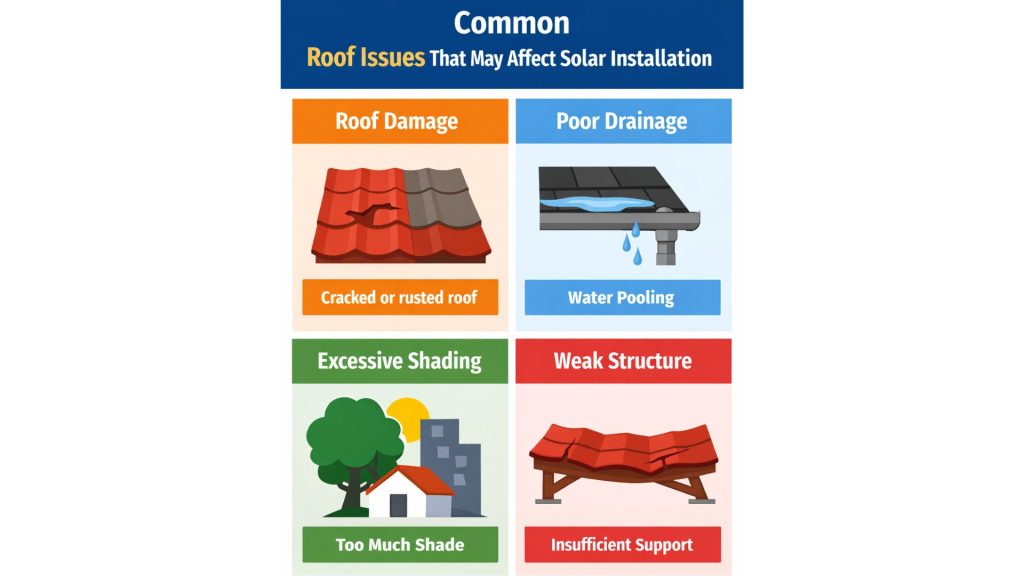
Common Roof Issues That May Affect Solar Installation
Some roof conditions may require attention before installing solar panels.
These include:
Roof Damage
Cracked tiles or rusted metal sheets may compromise installation safety.
Poor Drainage
Water pooling can damage both the roof and mounting structures.
Excessive Shading
Large trees or neighboring buildings may limit solar output.
Insufficient Structural Support
Weak roof beams may not support solar panel weight.
Identifying these problems early can help Malaysian homeowners avoid installation delays.
How to Prepare Your Roof Before Solar Installation
Homeowners planning to install solar panels can take several proactive steps to prepare their roofs:
Conduct a roof inspection
Check for leaks, structural damage, or aging materials.
Trim surrounding trees
Reducing shading can significantly improve solar energy generation.
Repair damaged roofing components
Replace broken tiles or rusted metal panels.
Clear roof obstacles
Remove unused satellite dishes or structures that block panel placement.
Plan renovations carefully
If you are renovating your home, consider solar installation during the renovation phase.
Preparing your roof early helps installers design a more efficient solar system.
Conclusion: Getting Your Roof Solar-Ready
Installing solar panels is a long-term investment, and ensuring your roof is ready is one of the most important steps before installation.
By following a solar pre-installation checklist Malaysia you can identify potential issues such as roof damage, shading, or structural limitations before committing to a solar system.
Taking time to evaluate roof orientation, condition, and available space helps ensure that your solar panels operate safely and efficiently for many years.
If you are considering solar installation, comparing reputable installers is an important next step.
Homeowners can discover solar panel companies in Malaysia through a business directory, explore services, and connect with installers who assess roof suitability. For solar providers, listing in the directory helps reach property owners actively researching solar installation and renewable energy solutions.