Pink Book vs Private Records in Malaysia
- 10 March 2026
- Healthcare
Key Takeaways
- The Pink Book and private antenatal records serve different roles. The Pink Book is the standard maternal record used across government healthcare, while private records document care within a specific clinic or hospital.
- Your pregnancy record should work across different providers. If care ever moves between private and government settings, having a clear and portable record helps doctors quickly understand your medical history.
- Opening the Pink Book early helps prevent complications later. Public guidance recommends registering pregnancy as early as possible at a government health clinic, typically during the first trimester.
- Even private patients may benefit from the Pink Book. It becomes especially useful during referrals, emergency transfers, or shared care between public and private providers.
- Many Malaysian mothers use shared antenatal care. This approach combines government registration with private specialist visits to balance documentation, convenience, and specialist continuity.
In Malaysia, the Pink Book is the public maternal health record used across government care, while private records are clinic- or hospital-specific notes. Many mothers benefit from understanding how both work together.
What Is The Pink Book In Malaysia?
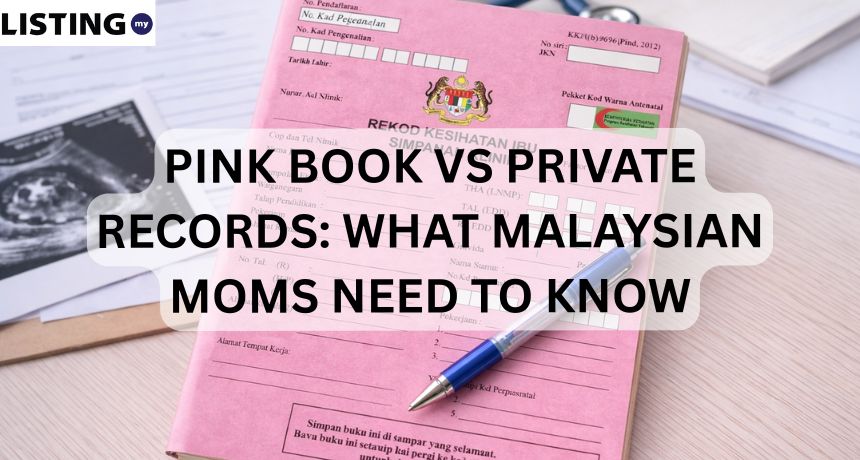
The Pink Book, or Buku Pink, is the pregnancy health record opened through the public healthcare system. Malaysia’s public guidance says expectant mothers are required to register pregnancy records at health clinics to open the Pink Book, and are advised to register as early as possible at the nearest government health clinic.
In practice, the Pink Book is more than a booklet. It is part of the public maternal care workflow. It helps document the mother’s health, the baby’s development, follow-up visits, and issues that may affect referral or delivery planning. That is why the question is not only “Where should I check up?” It is also “Which record will follow me through the pregnancy?”
For many mothers, the Pink Book becomes most important when care moves across settings. A private scan, a weekend clinic visit, or a later hospital admission all make more sense when the pregnancy record is consistent and easy to review.
The real decision is not government versus private alone. It is whether your pregnancy information will stay clear, portable, and useful when care changes.
You can compare women and children hospitals in Malaysia to explore facilities, services, and specialists before deciding where to receive care.
What Are Private Antenatal Records?
Private antenatal records are the notes, charts, scan reports, and follow-up documentation kept by a private clinic or hospital. These records can be detailed and clinically useful, but they are usually tied to that provider’s workflow rather than the government maternal record system.
Private records are often helpful because they can include:
- scan findings
- consultation notes from the same O&G specialist
- medication and supplement advice
- appointment continuity within one provider
- more personalised consultation history
That can be excellent for comfort and continuity inside the private setting. But it does not always answer the same administrative or cross-system needs as the Pink Book.
Pink Book Vs Private Records At A Glance
The simplest way to understand the difference is this: the Pink Book is the public pregnancy record, while private records serve the provider who created them.
| Feature | Pink Book | Private Records |
| Usual issuer | Government health clinic | Private clinic or hospital |
| Main role | Public pregnancy registration and follow-up | Provider-specific clinical record |
| Standard use in government system | High | Varies |
| Best for | Public monitoring, handover, referrals, shared tracking | Specialist continuity, private follow-up, scans |
| Useful if switching providers | Usually yes | Sometimes, but depends on provider and setting |
| Postnatal/public follow-up value | Stronger in public pathway | Helpful, but less standardised |
The key takeaway is not that one is “better” in every case. It is that they solve different problems.
Understanding how pregnancy records work also helps when comparing maternity packages at private vs government hospitals in Malaysia, since your delivery location can influence how these records are used.
Which Record Setup Fits Your Situation?
The best setup depends on where you expect to receive care most of the time and where you may need support later.
| Your Situation | What Usually Makes Sense |
| Government clinic check-ups and government delivery | Pink Book is central |
| Private check-ups and private delivery only | Private records are central, but Pink Book may still help if plans change |
| Private check-ups now, undecided delivery later | Keeping the Pink Book is safer |
| Shared care between government and private providers | Use both and bring both where relevant |
| Higher-risk or changing pregnancy plan | Prioritise record continuity, not convenience alone |
Do You Still Need The Pink Book If You Are Seeing A Private Doctor?
Often, yes — especially if your pregnancy care may interact with the public healthcare system at any point. This includes government clinic follow-ups, referrals, postnatal care, or delivery plans that change later in pregnancy.
Many mothers begin with private care but later adjust their plans. Common situations include:
- your preferred private hospital may no longer be the final delivery location
- a complication requires referral to another hospital
- cost considerations change the delivery plan
- you want private check-ups but public postnatal support
- shared care between government and private providers becomes more practical
When these situations occur, the Pink Book acts as a portable pregnancy record that healthcare teams across different settings can quickly understand.
Why The Pink Book Matters During Emergency Transfers
The importance of the Pink Book becomes clearer during unexpected hospital transfers. Even patients receiving private antenatal care may need referral if complications arise.
Private hospitals vary in their capacity. Severe maternal complications or extremely premature births may require treatment at larger government facilities such as Hospital Tunku Azizah, which provides advanced maternal and neonatal services.
In emergency situations, doctors must quickly review the mother’s medical history before making treatment decisions.
When the Pink Book is available:
- doctors can immediately review pregnancy history
- blood group, allergy information, and screening results may already be recorded
- antenatal monitoring such as blood pressure trends can be checked quickly
When it is not available:
- clinicians may treat the patient as an unbooked case
- medical history must be reconstructed and some tests repeated
For this reason, many obstetricians recommend opening the Pink Book early in pregnancy, even if routine check-ups continue with a private specialist.
“The Pink Book is not about choosing government care over private care. It ensures your pregnancy history can be understood quickly if care ever needs to move between providers.”
Shared Antenatal Care: A Practical Strategy For Busy Mothers
Many Malaysian mothers combine government registration with private specialist visits. This approach is commonly called shared antenatal care.
It allows mothers to keep the Pink Book for public system continuity while enjoying the convenience and continuity of private O&G appointments.
Here is how the process typically works.
1. Book Your First Antenatal Appointment
Pregnant mothers can usually arrange their first government clinic visit through appointment systems such as MySejahtera or directly with the nearest Klinik Kesihatan (government health clinic).
The first visit usually includes pregnancy registration and baseline health screening.
2. Establish The Pink Book
During the initial appointment — often in the early first trimester — the clinic will open the Pink Book and record important baseline information such as:
- pregnancy history
- blood pressure and weight
- laboratory screening tests
- early pregnancy health assessment
This creates the official maternal record used across public healthcare services.
3. Continue Check-Ups With Your Private O&G
After the Pink Book is established, many mothers continue routine scans and consultations with their private obstetrician and gynaecologist (O&G specialist).
At these appointments, doctors may update key readings such as:
- blood pressure
- weight
- ultrasound findings
- pregnancy progress
Recording these updates in the Pink Book helps keep a consistent pregnancy history.
4. Reduce Unnecessary Government Clinic Visits
Shared care can reduce the need for frequent government clinic appointments, especially when the private doctor continues monitoring the pregnancy and documenting updates.
This approach allows mothers to balance:
- structured public maternal monitoring
- specialist private care
- more predictable appointment scheduling
For working mothers and business owners managing busy schedules, shared antenatal care can offer a practical compromise between system-wide documentation and convenient private follow-up.
What Usually Happens At First Booking?
Government first booking is usually more structured, while private first booking is often more flexible.
| First Booking Area | Government Clinic | Private Clinic |
| Pregnancy registration | Core step | Varies by provider |
| Health history | Usually more structured | Usually provider-led |
| Urine test | Common | Common |
| Blood pressure and weight | Common | Common |
| Blood test | Common in public workflow | Depends on provider |
| Scan / ultrasound | May not be the centre of first visit | Often a major part of visit |
| Waiting time / scheduling | Usually less flexible | Often more flexible |
That does not mean one side is automatically better. It means they are optimised differently. Public care is built around system-wide maternal monitoring. Private care is often built around convenience, continuity with one doctor, and patient experience.
If you are still unsure whether your symptoms indicate pregnancy, understanding the early pregnancy signs and when to book your first appointment can help you take the next step confidently.
Common Mistakes Malaysian Moms Make
Many first-time mothers misunderstand how pregnancy records work across Malaysia’s healthcare system. The most common issue is assuming the Pink Book and private records serve the same purpose.
✅ Do
- Open the Pink Book early if your care might involve government clinics. Public guidance encourages early pregnancy registration at the nearest Klinik Kesihatan.
- Keep your pregnancy records updated across providers. If you are seeing a private O&G specialist, ask them to update key readings such as blood pressure and scan findings in the Pink Book.
- Plan for changes in your care pathway. Pregnancy plans can shift due to medical needs, delivery choices, or cost considerations.
- Bring your Pink Book to important appointments or hospital visits. This ensures your pregnancy history can be reviewed quickly if referral or emergency care becomes necessary.
❌ Don’t
- Don’t assume private records automatically replace the Pink Book. They may contain similar information but usually follow a different documentation system.
- Don’t delay opening the Pink Book because your pregnancy seems straightforward. Early documentation helps avoid administrative delays later.
- Don’t choose care purely based on convenience or cost. Record continuity, referral pathways, and emergency readiness are equally important factors.
A Better Way To Decide
Instead of asking only whether government or private care is “better,” it is often more helpful to ask which records will still make sense if your care moves between providers. Pregnancy plans can change, and clear documentation helps different teams understand your history quickly.
Use this quick framework when deciding:
- Where will most of your antenatal check-ups happen?
- Where do you currently plan to deliver?
- Could that delivery plan change later in pregnancy?
- Will you need government follow-up, referral, or postnatal care?
- If you move between providers, will the next team be able to understand your pregnancy records easily?
If your care will remain fully private, provider records may be enough for routine monitoring. But if there is any possibility of government clinics, referrals, or shared care, keeping the Pink Book alongside private records usually provides better continuity.
Ultimately, the most useful pregnancy record is not simply the most convenient one today. It is the one that remains clear and portable if your care pathway changes.
A good pregnancy record is not the one that feels easiest today. It is the one that still helps when plans, providers, or risk levels change.
Once you understand how pregnancy records work, the next step is learning how to choose a women and children hospital in Malaysia that fits your delivery plan and care preferences.
Conclusion
The Pink Book and private antenatal records serve different purposes in Malaysia’s healthcare system. The Pink Book supports the public maternal care pathway, while private records document care within a specific clinic or hospital.
For many mothers, the practical approach is ensuring pregnancy records remain clear and portable, especially if care moves between providers. Opening the Pink Book early while continuing private specialist visits can help maintain continuity throughout pregnancy.
When you are ready to explore providers, a verified business directory can help you compare hospitals, specialist clinics, and maternity services in one place.
FAQs: Pink Book Vs Private Records
Can Private Records Replace The Pink Book Completely?
Not in every situation. Private records may contain similar clinical details, but live Malaysian sources indicate they can serve a different role from the public Pink Book workflow.
When Should I Open The Pink Book?
Public guidance says to register as early as possible at the nearest government health clinic. Several Malaysian explainers commonly suggest first-trimester timing, often around 10 to 13 weeks.
Do I need a Buku Pink to get my baby vaccinated?
While your baby will be issued their own record book upon birth, having your maternal Buku Pink allows KKM to seamlessly transition your file to your child’s vaccination schedule at the Klinik Kesihatan, ensuring they receive free national immunizations.
Can I do all my check-ups at a private clinic and just transfer the data?
Yes, this is called shared care. However, you must still physically open the Buku Pink at a Klinik Kesihatan first, and you are usually required to attend at least a few milestone check-ups with the government medical officer to maintain active status in their system.
Can I deliver at a private hospital with a Buku Pink?
Yes. Every private hospital in Malaysia accepts and utilizes the Buku Pink. In fact, upon admission for your delivery, the private nurses will ask for it to cross-reference your latest blood test results and Group B Strep (GBS) status.
What happens if I don't have a Buku Pink and go to a government hospital?
If you go into labor and arrive at a government hospital without a Buku Pink, they will still deliver your baby. However, you will be classified as an “unbooked mother.” This means you may face longer triage times, immediate mandatory blood tests, and potentially a longer post-delivery hospital stay for observation.