A Malaysian Homeowner’s Guide to Buying Quality Marble
Key Takeaways
- Marble selection should prioritise usage and climate, not just appearance, especially in Malaysia’s humid conditions
- Low-quality or high-porosity marble fails within 6–18 months without proper sealing and planning
- Different applications require different marble grades, from countertops to flooring and walls
- Supplier reliability matters as much as stone quality, especially for consistency across slabs
- Lifecycle cost, not upfront price, determines true value when buying marble
Buying quality marble in Malaysia means choosing stone based on porosity, durability, and application, not just colour or veining.
Most Malaysian homeowners start with aesthetics, focusing on veining, colour, and finish. While these matter, they do not determine how the marble will behave after installation.
Marble performance is shaped by factors like:
- Porosity
- Finish type
- Can it tahan lasak in Malaysia’s humid climate.
A surface that looks flawless on day one can begin showing stains, dullness, or etching within months if the wrong type is chosen.
This is why both homeowners and professionals must view marble as a long-term material investment, not just a visual upgrade.
What Does “Quality Marble” Actually Mean?
Quality marble is defined by durability, consistency, and suitability for its intended use.
Not all marble is created equal. Even slabs that look identical can behave very differently over time.
To assess quality, buyers should focus on:
- Porosity rate: Determines how easily the marble absorbs liquids, critical for kitchens and bathrooms
- Density and hardness (Mohs scale): Affects resistance to scratches and wear in high-traffic areas
- Surface finish (honed vs polished): Influences both appearance and maintenance requirements
- Structural integrity: High-quality slabs have fewer microcracks and require less resin filling
For Malaysian conditions, lower porosity and higher density translate into better long-term performance.
Marble Failure Timeline: What Happens After Installation
Most marble problems don’t appear immediately, they show up after real-world use.
Understanding this timeline helps buyers avoid short-sighted decisions.
0–3 Months
Surface looks pristine, no visible issues
3–6 Months
Early signs of etching, especially in kitchens and bathrooms
6–12 Months
Water absorption and staining become noticeable in unsealed or low-grade marble
12–18 Months
Permanent discolouration, dullness, or patchy finishes may appear
This delayed failure pattern is why many homeowners mistakenly believe they chose “good marble” at first.
How to Choose Marble Based on Application
The right marble depends on where and how it is used, not just how it looks.
Different areas of the home place different demands on the material.
Kitchen Countertops
- High exposure to water, oil, and acids
- Requires low-porosity, dense marble or frequent sealing
- Honed finishes can hide etching better than polished ones
Living Rooms and Hallways
- Moderate to high foot traffic
- Prioritise scratch resistance and consistency across slabs
- Polished marble enhances visual impact but may show wear faster
Bathrooms and Wet Areas
- Constant moisture exposure
- Choose marble with strong sealing compatibility
- Anti-slip considerations may favour honed finishes
Feature Walls and Decorative Surfaces
- Low physical stress
- Greater flexibility in choosing aesthetic-focused marble
- Bookmatched slabs are often used for visual impact
Common Mistakes Malaysian Buyers Make
Most marble issues come from mismatched expectations, not bad materials alone. Many homeowners and even contractors overlook real-world usage factors.
Mistakes to Avoid:
- Choosing marble based purely on showroom appearance
- Using high-porosity marble in wet kitchens
- Skipping or delaying sealing after installation
- Assuming all marble behaves the same across suppliers
- Confusing natural marble with engineered surfaces like quartz
Example Scenario: A homeowner installs marble countertops in a frequently used wet kitchen. Within months, oil stains and etching appear, requiring costly restoration or replacement.
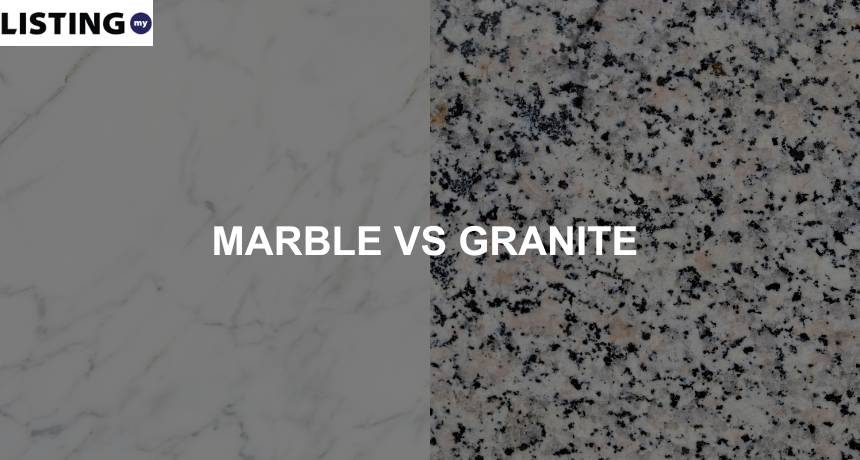
Read more: Marble vs Granite: Which is Best for Malaysian Homes?
Malaysia-Specific Considerations When Buying Marble
Buying marble in Malaysia is not just about choosing a beautiful stone, it is about choosing one that can perform in a hot, humid, and contractor-driven market.
The country’s equatorial climate brings consistently high humidity and abundant rainfall, while some areas also face intense sun exposure and high daytime temperatures.
This means marble surfaces in homes and commercial spaces face more moisture stress than buyers may expect.
Climate Impact
Malaysia’s climate increases the importance of porosity, sealing quality, and maintenance planning.
This is especially relevant for wet kitchens, bathrooms, covered outdoor spaces, and ground-floor areas with frequent mopping or spill exposure.
- High humidity can worsen moisture absorption, especially in lower-density or poorly sealed marble
- Frequent rain and damp conditions increase the risk of staining near entrances, semi-outdoor spaces, and moisture-prone walls
- Strong sunlight and heat exposure can gradually affect appearance, especially in bright living areas or façade applications
- Cleaning habits matter more because repeated use of acidic or harsh chemicals can accelerate etching and dullness
This is why a marble that looks premium in a showroom may underperform at home after 6 to 12 months of use.
Installation Practices
Even good marble can fail early if the installation is rushed, the substrate is poorly prepared, or sealing is skipped or unevenly applied.
That creates a gap between what is sold visually and what is required technically.
- Contractor workmanship varies widely, especially across renovation, residential, and small commercial jobs
- Post-install sealing and maintenance advice is often inconsistent, leaving homeowners unsure how to care for the surface after handover
CIDB is the principal agency for contractor registration in Malaysia and also regulates quality certification for specified construction materials under Act 520.
Supply Chain Reality
Malaysia is a trade-reliant market, so marble quality can vary by source, batch, and supplier discipline.
Many marble options sold in Malaysia are imported or distributed through import-led supply chains.
That matters because origin alone does not guarantee performance. Two slabs described under the same commercial name may still differ in density, veining consistency, filler treatment, and long-term durability.
For buyers, this creates several risks:
- Batch inconsistency, especially for larger projects or phased renovations
- Variation within the same origin country, because quarry, grade, and processing quality all matter
- Overreliance on showroom samples, which may not reflect the full lot delivered to site
- Confusion between natural marble and other stone or engineered lookalikes
A stronger supplier should be able to explain origin, finish, recommended use case, and whether the slab has been resin-treated, reinforced, or pre-sealed.
Industry Context
In many projects, the homeowner chooses from a shortlist prepared by the contractor, interior designer, or stone shop.
The conversation often centers on visual appeal, square-foot cost, and whether the colour matches the design theme.
Yet performance questions come later, sometimes too late.
Common local buying patterns include:
- Prioritising looks first, maintenance later
- Accepting a contractor’s suggestion without checking application suitability
- Comparing quotes based on upfront installation cost, not lifecycle cost
- Underestimating the role of humidity, cleaning chemicals, and daily wear
For this reason, your article should help readers move from a design mindset to a performance and sourcing mindset.
How to Evaluate Marble Before You Buy
An evaluation checklist helps Malaysian buyers avoid choosing marble that looks right but performs poorly.
What is the porosity level of this marble?
Higher-porosity marble generally needs more sealing and carries higher staining risk in humid environments.
Is it suitable for my specific application?
A marble that works well on a feature wall may not be suitable for a wet kitchen countertop or a high-traffic floor.
Has the marble been resin-treated, reinforced, or repaired?
Some treatments are normal, but buyers should know what has been done and how it affects durability.
Can the supplier guarantee batch consistency?
This matters for larger floor areas, staircase runs, island tops, and projects completed in phases.
What finish is recommended for this use case, honed or polished?
Polished marble gives more visual impact, while honed finishes may better hide scratches and etching.
Who is installing it, and what is their experience with natural stone?
Stone installation quality can influence joint lines, lippage, sealing quality, and long-term durability.
What cleaning products should be avoided?
This is especially important because acidic cleaners can damage calcium-based natural stone like marble.
What Good Answers Sound Like
A credible supplier or installer should be able to explain:
- Where the marble comes from
- If it is better for walls, floors, or countertops
- How often it should be sealed in Malaysia
- What finish best fits the intended use
- wWether the current slabs come from the same batch
If the conversation stays at the level of “this one is popular” or “this one looks more premium,” the buyer still does not have enough information.
The Role of Suppliers: Why Source Matters
A reliable supplier reduces risk far more than a slightly cheaper slab ever will.
Marble is a natural material, which means variation is unavoidable. The difference lies in how well suppliers manage it.
Factors to evaluate:
- Consistency across batches (critical for large areas)
- Transparency in grading and origin
- Ability to advise based on application, not just aesthetics
- Post-sale support (sealing guidance, maintenance advice)
For homeowners and contractors looking to compare options, our business directory Listing.my can help identify and evaluate marble suppliers in Johor and across the causeway.
Be sure to ask the questions we list here and be thorough with them, if they can’t answer you, find someone else that could.
Frequently Asked Questions About Buying Marble
How often should marble be sealed in Malaysia?
Most marble surfaces should be sealed every 6 to 24 months depending on usage, porosity, and exposure to moisture.
Is marble suitable for Malaysian kitchens?
Yes, but only if the correct type is chosen and properly sealed. High-porosity marble is not recommended for wet kitchens.
What is the difference between honed and polished marble?
Honed marble has a matte finish and hides scratches better, while polished marble is glossy but more prone to visible etching.
Is expensive marble always better?
Not necessarily. Suitability for the intended application and proper installation matter more than price alone.
How can I tell if marble is high quality?
Check for low porosity, high density, minimal cracks, and consistent patterning across slabs.
Should I rely on my contractor’s recommendation?
Contractors can provide useful input, but it is best to independently verify material suitability and compare multiple suppliers.